The path of unclenching: Buddhism, the body, and ten days of silent meditation at Dhamma Geha, Bali
September 25, 2026
I recently finished a ten-day silent meditation retreat. It was often painful and occasionally strange, yet valuable in unexpected ways. It wasn't my introduction to meditation, though. For about five years, throughout college and for a year or so after, I had a 20-minute daily meditation habit. I quit about six years ago. When I first started, I experimented with a few different techniques, but I ultimately landed on a practice of breath-counting, where I would observe my breath coming in and out while focusing my attention on my lower abdomen. I would count breaths up to ten and then begin again at one, or if the mind wandered before I reached ten I would begin again at one upon noticing the mind had wandered. The practice helped me a lot initially, and I credit it with helping me develop much more empathy, likely because it helped me understand my own emotions better. I met a lot of other meditators along the way, many of whom had done one or more of these ten-day retreats and had positive things to say, so it's been on my radar for a long time to attend one.
Over time my practice became a chore though — just another task I felt I had to continue for the sake of maintaining my streak — so the practice eventually became very frustrating and I would often get off the meditation mat feeling less at ease than when I sat down. But the biggest challenge by far was pain. Sitting down on the mat cross-legged for just 20 minutes would often require shifting around every few minutes to manage the pain in my legs and hips. Kneeling or sitting on a chair was slightly better but still very difficult. And the problem was never flexibility. In fact, it was the opposite. I'm hypermobile, and I'll have more to say about that later.
I went into the retreat with a bit of knowledge of the history and ideas behind Buddhism. I took classes on the history of both China and Japan in college, in which I learned the high-level history of Buddhism's origin around 2,500 years ago and how it evolved as it spread outside of India. I don't know much about Buddhist phenomenology — the Buddhist account of how the mind works and the nature of conscious experience — but I have read Scott Alexander's review of the book Mastering the Core Teachings of the Buddha. The book is written by an ER physician, and tends to attract secular, nerdy types like engineers, scientists, and psychologists. In Alexander's account, it reads like a clinical handbook, presenting Buddha's teachings as a rigorous procedure that produces a predictable sequence of experiences, challenges, and breakthroughs on the path to enlightenment. I also went into the retreat with some familiarity with the jhānas, discrete states of consciousness characterized by overwhelmingly positive sensations, typically experienced in meditation and likely described under other names by Muslim and Christian mystics such as Teresa of Ávila, who may have experienced them during prolonged states of prayer. Finally, I'm familiar with Michael Edward Johnson's theory of vasocomputation[1]. The theory attempts to reconcile Buddhist phenomenology with human physiology. Johnson points out that the vascular system, made up of the heart and blood vessels, is much more than a plumbing system for blood. Whereas blood typically flows to areas of the body and brain in response to an increase in neuronal activity, some have suggested that blood flow often begins first, exerting fine-grained control over neuronal activity. Johnson points out that smooth muscle, which lines the body's blood vessels, can lock into a contracted position[2] and precisely modulate blood flow in healthy tissue by a factor of 20 (i.e., by nearly 2,000%). In the brain this could lock an individual into certain patterns of thought and reaction, and in the body it could lock an individual into a specific pattern of motion. In short, you can clench anywhere in the body that blood flows. Reactions may actually begin as a clench in the vascular system that exerts control over the nervous system[3]. If so, even thinking itself — grasping a concept or holding an image or a plan in mind — may be the mind clenching around an idea to keep it in place.
When one is badly injured, the body responds by increasing tension in the affected area to reduce motion and prevent further injury. This is adaptive at first, but if the pattern stays locked in place it becomes maladaptive, like the victim of a car accident who maintains a limp decades after their injuries have fully healed. This is why doctors advise you to move as soon as possible after an injury or surgery, at least within the range of motion that is manageable without severe pain, so that the associated pattern of tension doesn't lock in and permanently reduce the dynamic range of the body. Vasocomputation suggests that psychological trauma may also be a persistent pattern of maladaptive clenching. Again, this may be adaptive initially. For example, a soldier in combat is hypervigilant. Their attention narrows to threats, their body tenses at sudden noises, and they sleep lightly. This keeps them alive in a combat zone, but if the pattern locks in, it keeps firing when the threat is gone. Back home, a crowd watching fireworks might feel delight, awe, or mild annoyance at the noise, but a traumatized veteran may invariably brace themselves and duck for cover. In treatment-resistant PTSD, this kind of pattern stays permanently locked in, reducing the mind's dynamic range to a single response. Whether or not Johnson's theory turns out to be correct, it's a useful framework for understanding how we get stuck in patterns of suffering, and why it's so hard to get unstuck. It frames the mind in the language of the body. I thought of it often during the retreat.
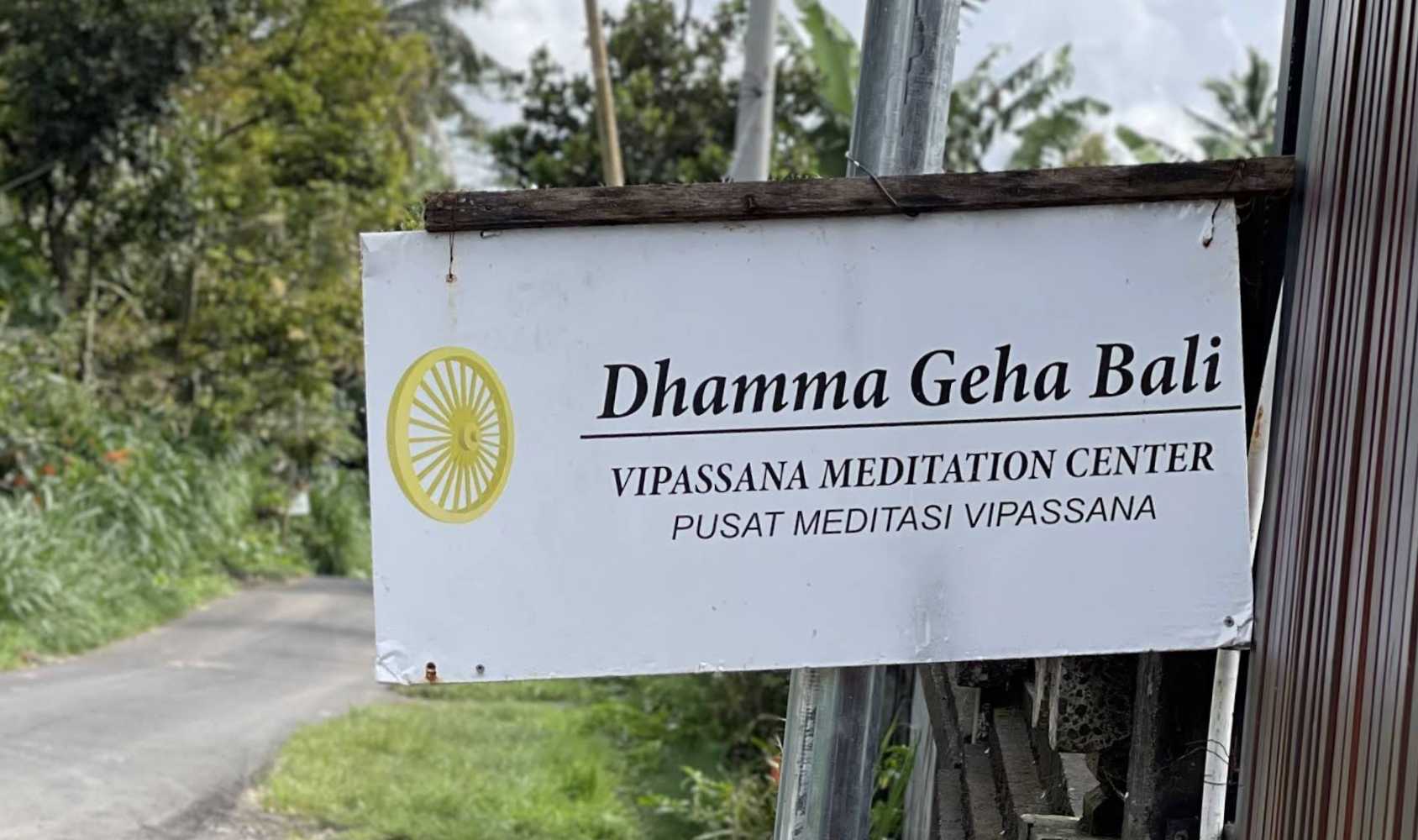
The retreat was held at Dhamma Geha in Bali, Indonesia, a Vipassanā center in the lineage of S.N. Goenka. Chances are, if you're even a little bit into meditation you know exactly what I'm talking about. Goenka's network of Vipassanā centers is probably the largest international organization running Buddhist meditation retreats. There are well over 200 locations worldwide that run these ten-day silent retreats. Although Vipassanā simply means insight in the ancient Indian language Pāḷi, it has become synonymous with these ten-day Goenka programs. That said, it seems to be less of an organization than a movement. I believe most or all of the centers are run independently with their own nonprofit structure, though they all run essentially the exact same program. The Goenka tradition calls these programs courses, but most people know them as retreats, and I use the two words interchangeably.
Goenka, who passed away in 2013, was an Indian man born in Burma (now Myanmar), who began practicing Vipassanā in the 1950s and started opening Vipassanā centers in the 1970s. All of the courses at these centers today play audio and video recordings of Goenka as the primary form of instruction. There are also two so-called assistant teachers present, one for men and one for women, who attend all the meditations and are the main point of contact for questions and concerns about one's meditation practice — the course isn't entirely silent.
Before I get into the day-to-day of the retreat, a few quick high-level notes. First, everyone arrives on the evening of day zero, and the course concludes on the morning of day eleven. In this course, there were about 50 people in attendance, 25 men and 25 women. The course grounds are physically split down the middle so that you won't see members of the opposite sex except in your periphery in the meditation hall, where there are two entrances (one on each side), and where men and women sit on opposite sides of the room, all facing forward toward the assistant teachers at the front of the room. All participants at the retreat, also called students, take a vow of noble silence, meaning that in addition to not speaking, you don't communicate through body language, gestures, or eye contact with anyone except the course manager (again, one for each sex) or the assistant teacher, and only if necessary. The assistant teacher may also occasionally call you up to inquire about the progress of your practice, and the course manager may communicate with you if it appears you're experiencing some difficulty or if you are late to one of the required group sittings. As a result, I basically did not look anyone in the eyes, unless by accident, for the first nine days of the retreat — more on day ten in a moment. I had about five to six short interactions with the teacher and manager in total throughout the course, and occasionally could hear these same interactions from other students. This, in addition to ambient noise within and around the center, made for an atmosphere of isolation more so than silence. We surrendered our phones on arrival and also turned in all reading and writing materials, so there was almost nothing to do outside of meditating, eating, and sleeping. Students are asked to set aside all forms of prayer, worship, and other religious rites and rituals for the duration of the course, and to turn in any religious or spiritual items such as prayer beads, crystals, incense, and images of deities. On day ten, noble silence is relaxed so you can chat with your peers, and the dining hall partition is drawn back so that you can see and chat with the opposite sex during meals.
We each had an assigned seat in the dining hall, marked with a cloth napkin, so for nine days I ate one foot from the same two men without ever speaking to them. The meals were phenomenal. They were officially vegetarian, but I would be hard-pressed to identify any item that contained dairy or eggs. There was also very strong ginger tea on tap in the dining hall, plus tea packets and instant coffee with optional sugar and honey. The diet was effectively a low-fat and potentially high-sugar vegan diet, with lots of beans, tempeh, and tofu for protein, all cooked with minimal oil. There was also a lot of fruit and salad served at each meal. I don't have any dietary restrictions in my day-to-day life, yet I loved the food. We were served breakfast and lunch every day, buffet-style, generally with plenty left for seconds. Dinner, however, was only a small portion of fruit for new students and just lemon tea for returning students[4]. I never went to bed hungry though, and I ate less and less each day. Meditating ten hours per day probably doesn't burn many calories.
Dhamma Geha is away from the tourist centers on Bali, but as I mentioned above, there was some ambient noise at the center. This came partially in the form of tropical birdcalls, a car horn or engine in the distance, and, about once every other night, what sounded like an extremely loud tree frog on the roof of the meditation hall, doing a single call that lasted about ten seconds[5]. These noises didn't bother me, and I imagine most students appreciated the sounds of nature. The vast majority of the ambient noise, however, came from chickens and pigs nearby. I could see chickens in the lot next door, foraging on the ground below a bunch of banana trees, and based on the chicken noise I heard throughout the retreat, I would guess that most land in the area has a handful of free-range chickens on it. Ninety percent of the chicken noise came from the roosters, and they were active throughout the day. They were by far the loudest during the 4:30-6:30am morning meditations though, and if I recall correctly they were pretty much silent by the last two sessions of the day, from 6-7pm and 8:15-9pm. But the chicken noise was nothing compared to the pigs. My guess is that the pigs were fed twice a day, once sometime between 7-10am and once around 5pm. They would squeal loudly during these times but were silent otherwise. I'm no expert on pigs, but based on the noise I would assume there were about 20 living a few properties down the road on the male side of Dhamma Geha, and another 20 or so living much farther up the road on the female side. Bali has very sharp, parallel ravines that cut across large portions of the island, and most roads run along the ridges between them. Dhamma Geha backs up to one of these ravines, and as a result, sound can be a bit deceptive in the area, so either one of the pig farms I heard could easily have been much farther away or on the opposite side of the ravine. The smell of the pigs from the farm on the male side would typically waft in our direction in the morning, but was only especially bad on day four, when it drifted into our space before the 4am morning wake-up bell, and was so strong it woke me up through my open window. It really wasn't horrible though[6]. Anyone with the resolve to do a ten-day silent meditation retreat in the first place should not feel deterred from Dhamma Geha because of the nearby animals. The ambient animal noise bothered me considerably less by day three and became almost irrelevant by day four.
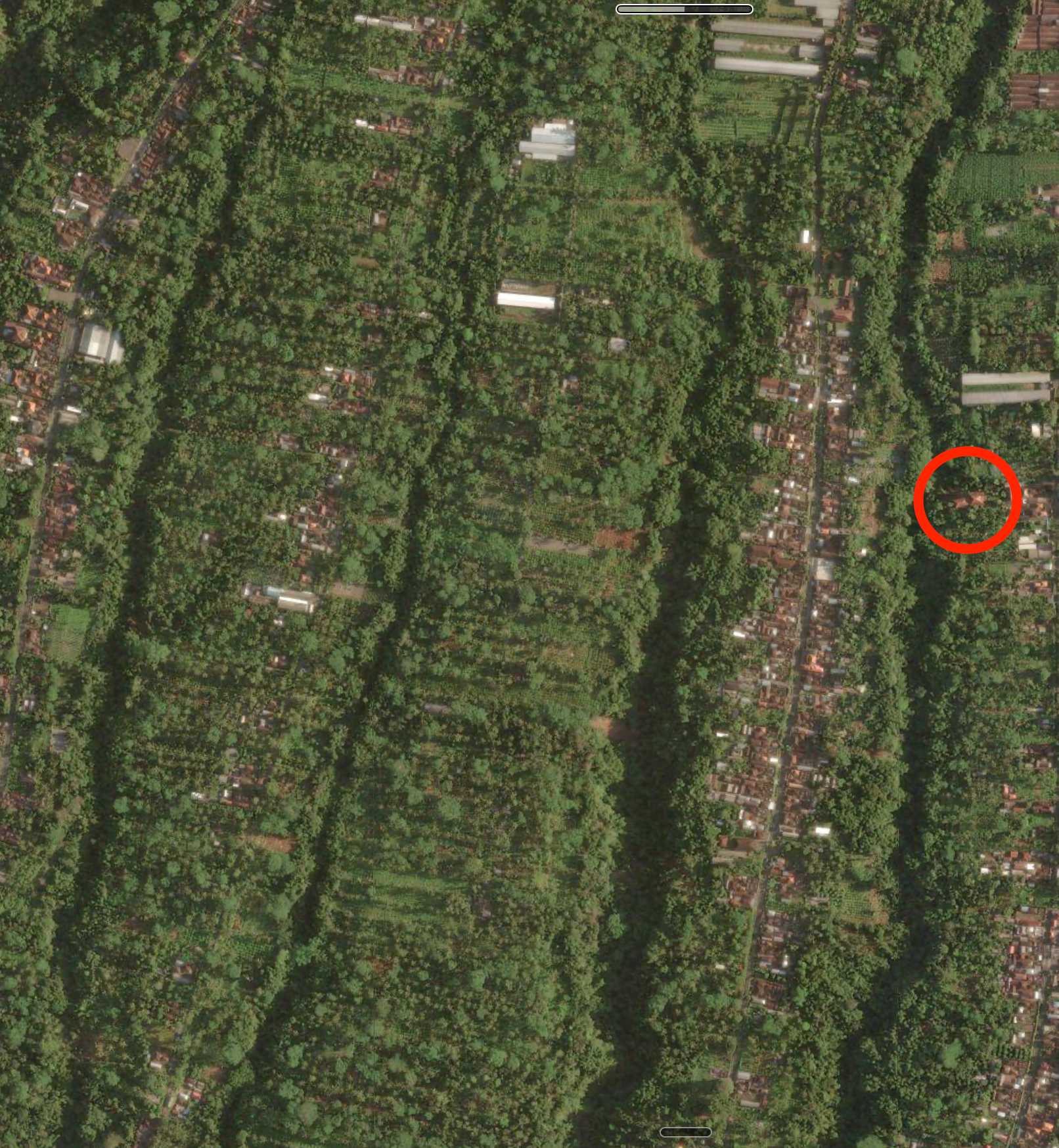
On days five, six, and seven, there was some human noise coming from the ravine in both directions. On day five there was a party in the distance with a very enthusiastic MC, and there were also a handful of people singing karaoke, presumably from their homes. The karaoke continued on days six and seven to a lesser extent. Day five was a Monday night, and given that the MC at the party was speaking Indonesian (or Balinese), I assume that lots of locals take their weekend starting on Monday, due to the weekend-heavy nature of the island's tourism industry. I was happy the MC was speaking a language I can't understand, because even though most of it was unintelligible due to how far away the sound was coming from, if I had been able to pick out a word every now and then that I understood, it likely would have distracted me. Similarly, the karaoke was all Indonesian or Balinese. There may have been one or two songs I recognized (I'm 80% sure I heard All of Me by John Legend), but it was only by the tune. Since karaoke tracks are usually re-recorded sound-alike instrumentals, and since all of the songs were in a foreign language, they also didn't bother me. I arrived in Bali only 24 hours before the retreat started, but on day ten the other students in the retreat made clear that this little bit of chaos amidst the natural beauty is just how Bali is. And once again, none of this noise bothered me, and none of the other students said it took away from their experience.
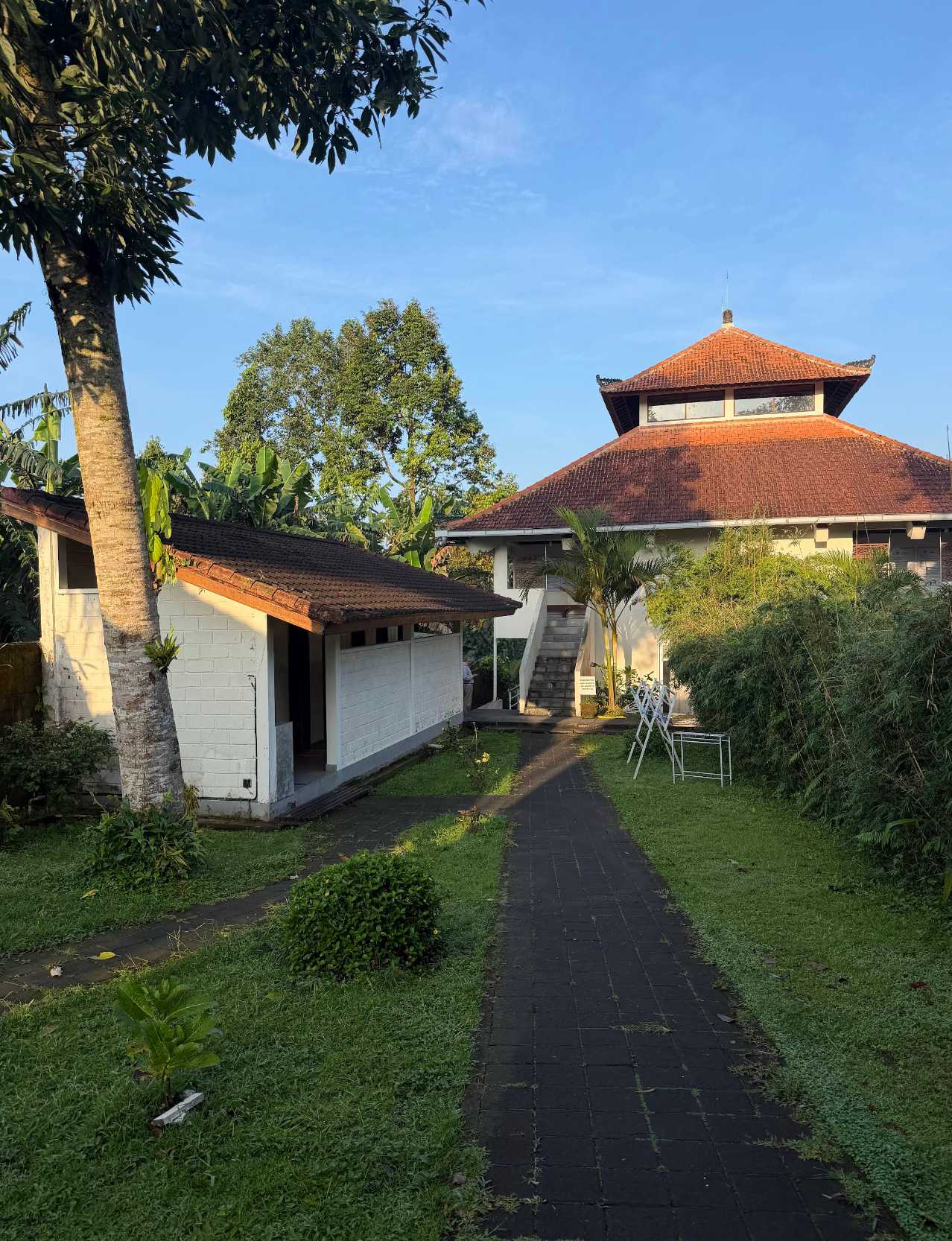
Inside the Dhamma Geha grounds, the setup was simple. Each student had their own room, with a thin mattress (slightly less wide than a normal twin bed), a small shelf for personal items, a dehumidifier, and a mosquito net. It's the dry season right now in Bali, so I didn't need to use the net or dehumidifier. There was about two feet of clearance to the left of each bed and at the foot of each bed. This turned out to be crucial space, as exercise was officially permitted but not outside of our rooms, as it can be a distraction for other students. I did a lot of pushups and handstands in this two feet of clearance in my room, and I did a lot of core exercises on my bed. This was also the only space on the grounds where we could wear shorts. Elsewhere we were required to wear long, loose-fitting pants.
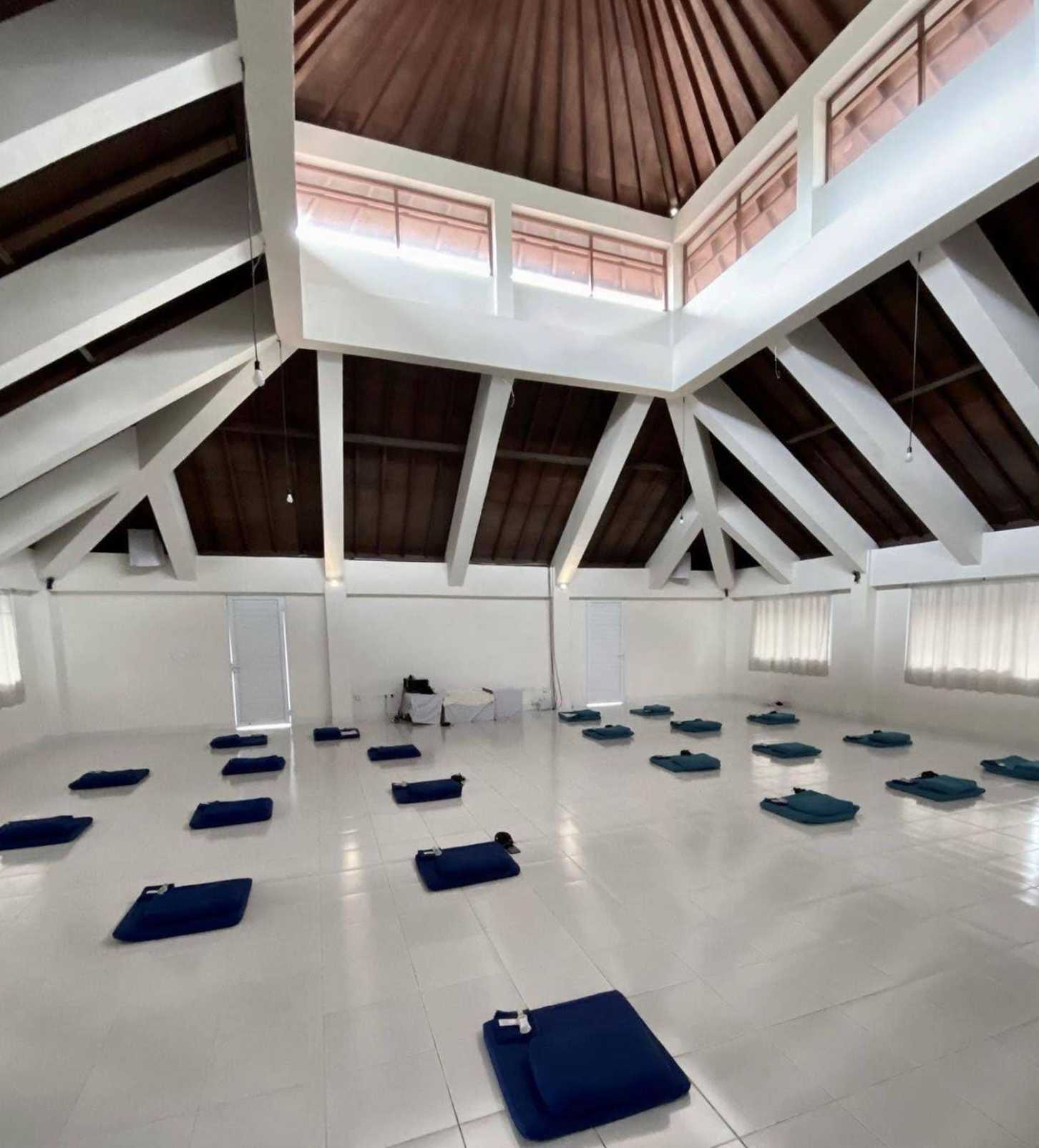
Beyond the rooms there were shared bathrooms on either side of the retreat center grounds, with plenty of showers and hot water. There was also the dining hall, the meditation hall (formally called the Dhamma hall), and a bit of walking space and grass between them all. Overall everything was simple. While booking my course I looked at a few other Vipassanā centers, and Dhamma Geha seemed to be pretty typical in terms of its facilities. There were a handful of centers in Thailand which looked absolutely incredible, with large golden pagoda Dhamma halls and lush gardens, but there were also centers elsewhere that were simpler than Dhamma Geha, with dorm rooms instead of a private room for each student. I'm sure it would have been awesome to go to a more beautiful center, but I don't really care. The value of the retreat was much more about the meditation techniques we learned than the physical setting.
I meant to take pictures on the morning of day eleven, when I got my phone back, but I was in a rush to catch the shuttle back into town and forgot, so below are photos I pulled from Google reviews of Dhamma Geha and from blog posts.


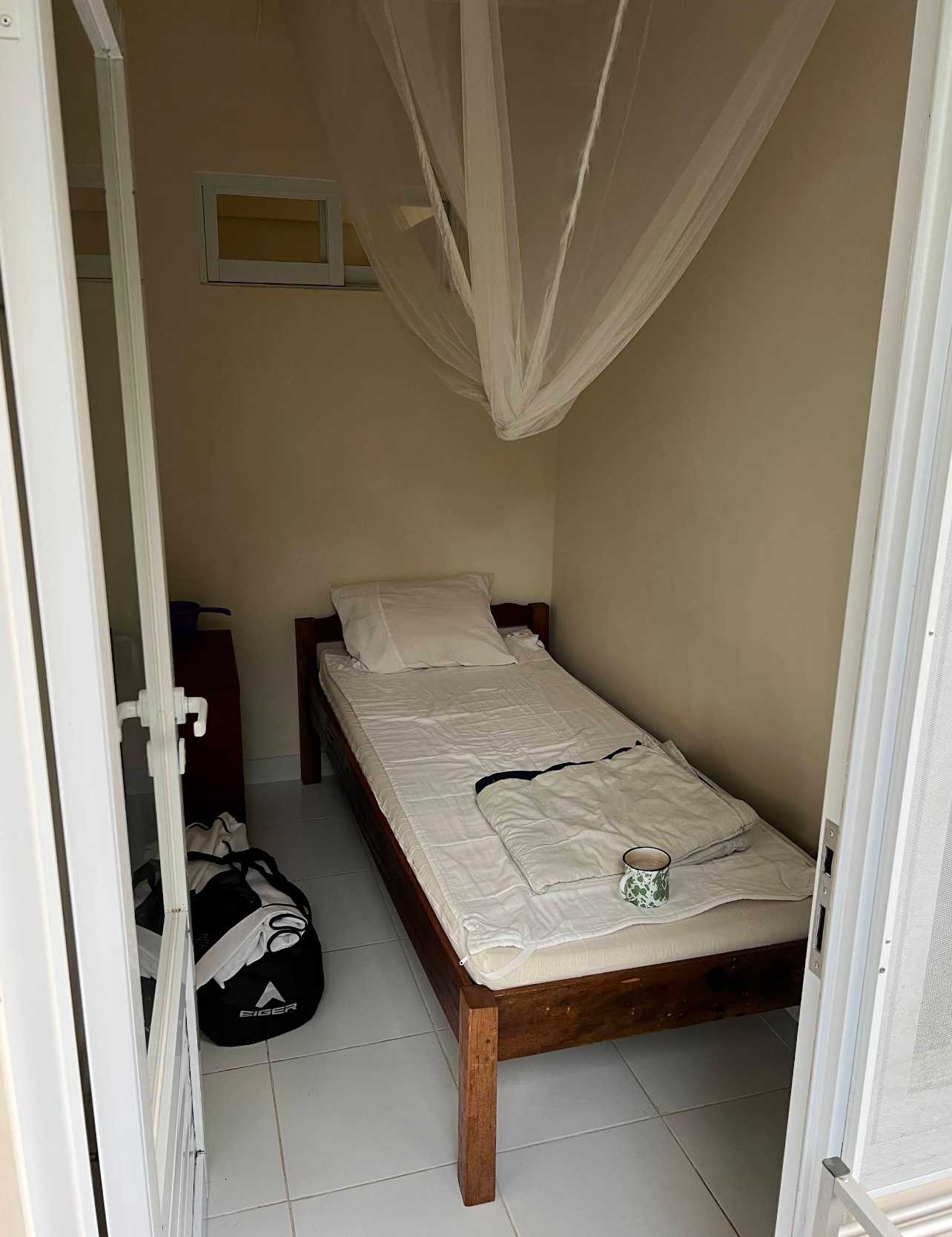
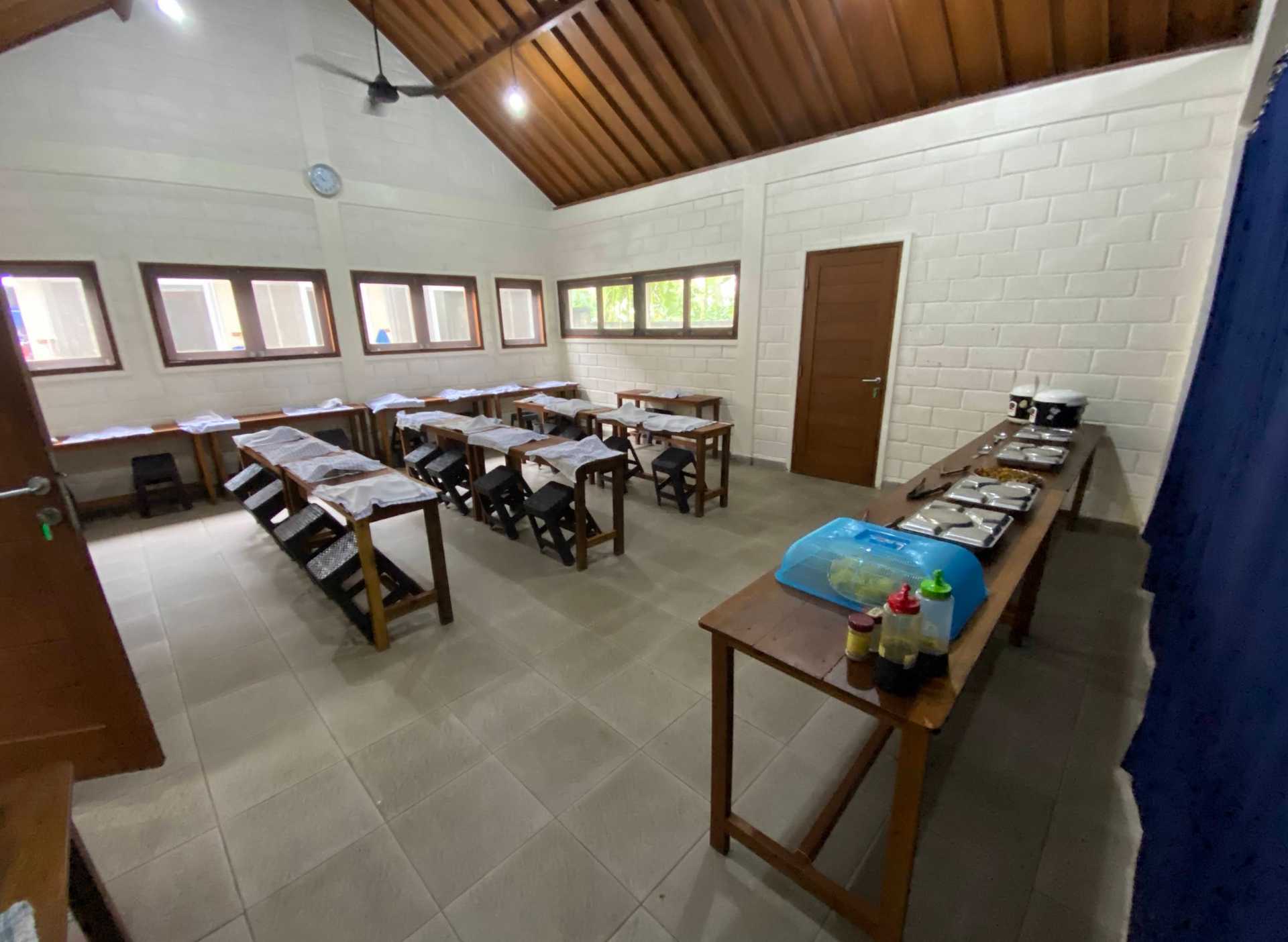
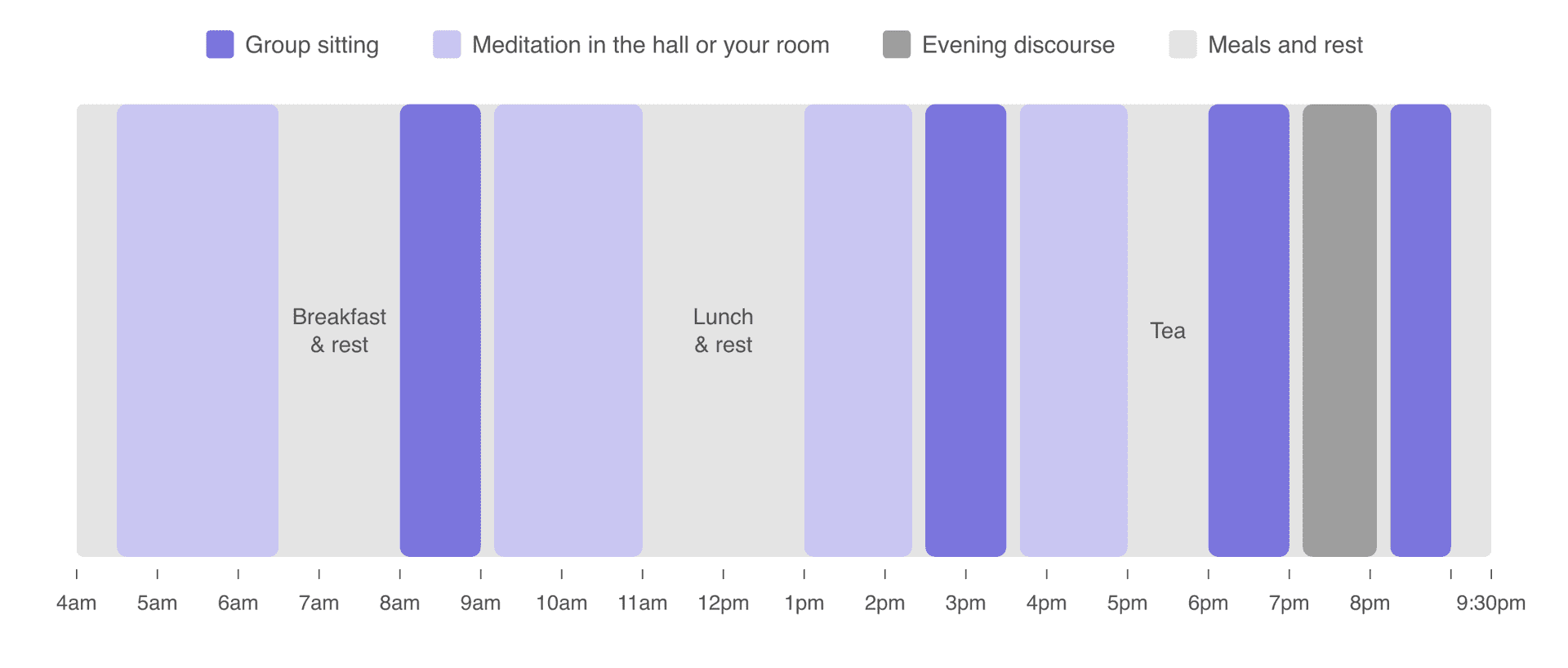
The daily schedule ran from 4am to 9:30pm. The schedule was posted every day on the outside wall of the dining hall, and a bell was played over a speaker system around the grounds ten minutes before each meditation session, and at the end of each session. The wake-up bell rang at 4am, followed by a ten-minute warning 20 minutes later for the first sit of the day. Typically meditations ran 4:30-6:30am, 8-9am, 9-11am, 1-2:30pm, 2:30-3:30pm, 3:30-5pm, 6-7pm, and 8:15-9pm. Lights went out at 9:30pm. All of the one-hour sits, as well as the final 45-minute sit from 8:15-9pm, were required group sittings, meaning we had to be in the meditation hall for them. For all other sessions we could meditate in the hall or in our rooms. There was always a ten-minute buffer on either side of the group sessions, meaning the 9-11am session actually ran 9:10-11am and the 1-2:30pm and 3:30-5pm sessions were also ten minutes shorter in practice. Breakfast was at 6:30am, lunch at 11am, evening tea break (with fruit for new students) at 5pm, and there was an evening discourse every night at 7pm, meaning we were in the meditation hall watching a video recording of Goenka explaining a bit of the theory behind the meditation we were practicing during the day.
If you're strongly considering doing a Vipassanā retreat in the near future, I recommend you jump to the last two paragraphs of this essay at this point. The rest of the essay contains a lot of my own personal experiences from the meditation techniques we practiced in the course, and I wouldn't want to bias your experience, or cause you to be searching out or expecting a set of experiences similar to mine.
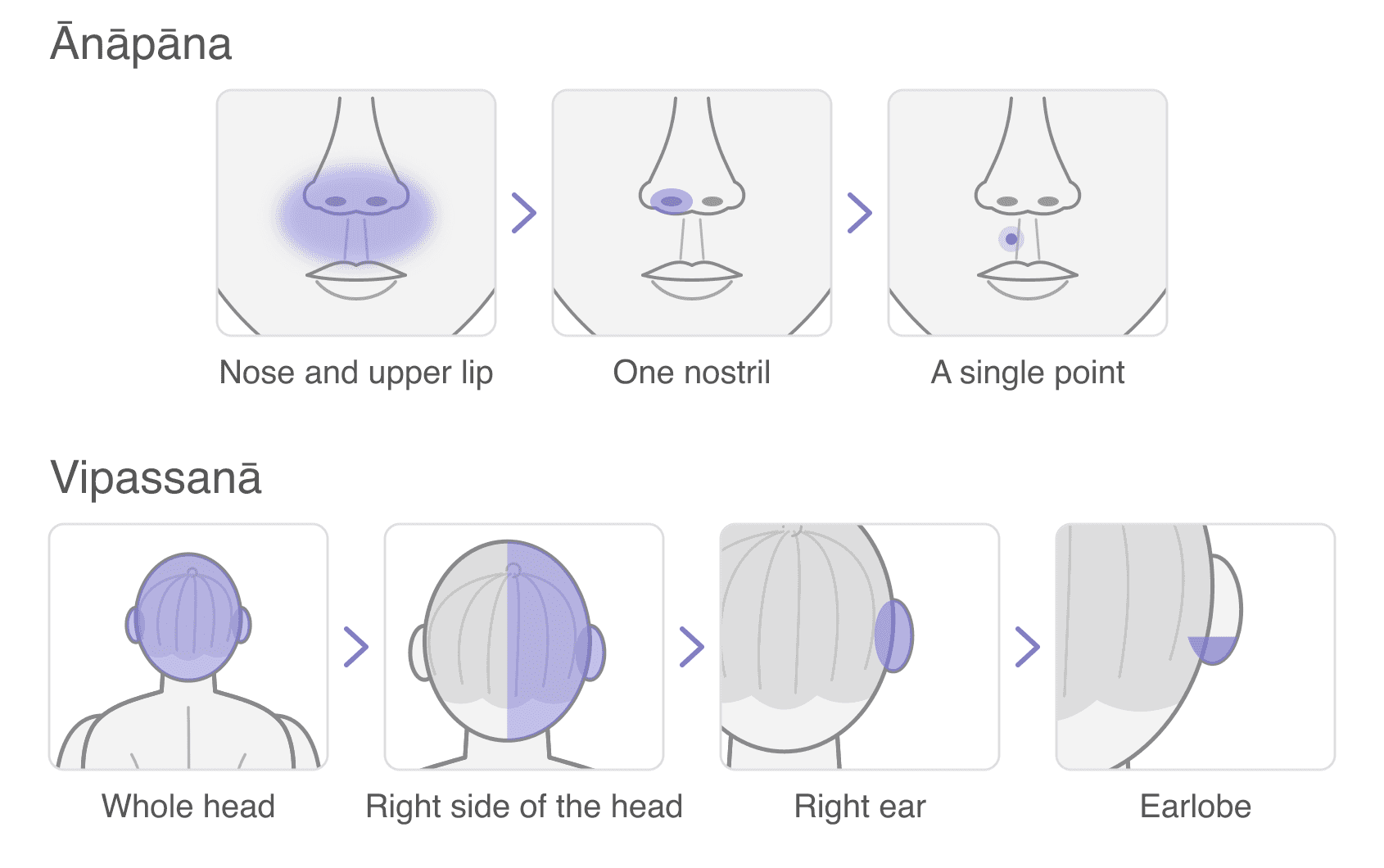
Days one through three and the morning of day four we practiced ānāpāna meditation. The core of this technique was to observe the breath at the base of the nose and the upper lip while breathing through the nose and to return our awareness to this focal point whenever we noticed that the mind had wandered. We were instructed not to control our breathing, but to just observe the natural breath, unless we felt drowsy or were having a particularly difficult time focusing. Then we could do a few intentional breaths, so-called hard breaths, and then return to observing the natural breath. Early in the course, Goenka also set a strong prohibition on verbalizations and visualizations, including counting breaths, as I did in my old meditation practice. Since the ānāpāna technique is breath-oriented, I occasionally did slip into the habit of breath-counting, but I always caught myself by about the third breath. It happened infrequently enough that I never felt annoyed or discouraged. In fact, I felt very encouraged by the technique. In my old breath-counting practice I was also ideally observing only the natural breath, but in practice it was very hard to do reliably, perhaps because I was focusing my attention on my lower abdomen, an area which moves as a result of the breath. With the ānāpāna technique, however, I rarely found myself inadvertently controlling my breath. It's probably a good thing that I quit my old habit a number of years ago to give myself some time to unlearn the old pattern.
Ānāpāna meditation was not easy though. It was very hard to stay focused. At one point, either the evening of day two or the morning of day three, Goenka came on over the speakers at the beginning of one of the group sessions and instructed returning students that they should ideally be able to focus on their breath for at least one minute before they lose their focus and their mind wanders, and he said they should ideally notice within two to five minutes that their mind had wandered and return to their breath. This was super encouraging because by that time I was focused on the breath well below 20% of the time and I rarely made it to a minute of uninterrupted focus. I was able to pretty consistently return to the breath within five minutes though.
As the days went on I noticed my mind wandering to a pretty consistent set of themes. I thought a lot about money, women, and life plans — a lot more than I'd like to admit. I also thought a lot about AI. I landed in Bali only 24 hours before the retreat started, and while in transit, I read Machines of Loving Grace, Dario Amodei's vision of a world with powerful AI, so in hindsight I could have anticipated the time I spent thinking about the topic in the early days of the retreat. I became a lot more bullish on the trajectory of LLMs[7], realizing I've been in a bit of soft denial on the topic since it implies a highly uncertain future.
Instead of sitting with the uncertainty, at one point I felt like I had sorted out my life plans for the next few years. This was obviously not the purpose of the meditation we practiced, but the planning arose naturally in the moments when my attention drifted from the breath, as well as in the rest periods while we weren't meditating. I got excited about my plans. In the first half of the retreat I was hitting daily personal records for how long and how still I could meditate, which gave me a lot of confidence. The confidence spilled over and gave me the sense that I could achieve whatever I set my mind to.
Sometimes, my mind would just chatter in the background while I was still focused on my breath, something like having the background noise of the TV on while you focus on preparing a meal. Just noticing the chatter was usually enough to pull my attention away from the breath, at least momentarily, because it was exciting to notice the mind on autopilot.
I'd noticed mental chatter on autopilot a few times in my old meditation practice, but only sporadically. The frequency with which I noticed it during the course created a bit of distance between my sense of self and my thoughts, because it showed me how I'm not always actively involved in thoughts, the same way that the breath is usually on autopilot. It gave me the impression that the various themes of mental chatter have a strong influence on how I experience and interact with the world. That may seem obvious, but the direct experience of frequently noticing mental chatter on autopilot made the impression stronger, directly analogous to the way in which a default pattern of quick, shallow breathing is bound to affect one's experience with the outside world much differently than a pattern of slow, deep breathing.
Starting on the evening of day two I began to notice that some thoughts of a visual nature, like a memory or a visualization of some future action, would begin to warp. In the midst of reminiscing about some event, the visual aspect in my mind's eye would sometimes begin to elongate out, like a ball of dough being stretched out. Sometimes the memory would swirl, or stretch out to the point of incomprehensibility. Other times, only the individuals in these visualizations would warp, becoming totally out of physical proportion or developing a sort of cartoon or uncanny nature to their physical features. This happened infrequently and never continuously, maybe a couple times per day, and occasionally outside of meditation hours. I would not call these experiences hallucinations, as they occurred in my mind's eye, not my visual field behind closed eyes.
On day three, I felt a very slight rocking, like the sensation of being on a boat in very calm waters. I figured it could be an earthquake, but given the distortions I had begun to experience in my mind's eye, I figured it was just a mild sensory hallucination as a result of the meditation. On day ten, once we could speak again, one of the first things another student said was, "Did you guys feel the earthquake?" Turns out it really was one. There was a 7.8 magnitude earthquake a few islands away on Flores Island.
There were also a handful of times I may have experienced auditory hallucinations. A few times I heard a very fine ringing in my ears for a moment. I've read that this can happen as a result of meditation, and that it's really just very low-level tinnitus that one may become aware of for the first time as their focus sharpens, but I was never convinced that these weren't simply some noise emanating from the lights, speakers, or some distant piece of industrial machinery. There were two times that I'm confident I hallucinated a split-second, sharp, crackling noise, something like the sound of cracking multiple knuckles at once underwater. It happened a handful of other times as well with just a single pop, but in these cases I think it was more likely just someone's joint popping in the middle of a meditation session, something that happened a lot, especially at the end of a session as people were getting up from their mats and walking out of the hall. There was another time I heard the sound of ice filling a glass, like when a bartender scoops a bunch of ice into a glass before filling it with water. This was a pretty similar noise to the crackling sound, but it happened while meditating on my back in my room and feeling quite drowsy, so it was more likely a dream sound coming from the threshold of sleep rather than an auditory hallucination from meditation.
Goenka refined the ānāpāna meditation technique day by day. First we were instructed to focus on the sensations caused by the air moving in and out of the nose. I usually felt the air moving on my upper lip or right inside the inner ring of my nostril. We were also instructed to observe whether we were breathing through one or both nostrils without having any desire to change what was happening. I learned that I rarely breathe through both nostrils at once, and I breathe through my right nostril about 50% more often than my left nostril. By day three, we were directed to focus on the breath only until we could identify any concrete sensation in the same region of the face, like a tingling sensation on the outside of the nostrils, a throbbing on the upper lip, or an itch. Once identified, we focused on this sensation until it dissipated or the mind wandered, and then we would return to the breath and begin again. This practice was preparing us for the new meditation technique we learned on day four, which I'll discuss soon.
My focus improved as Goenka refined the ānāpāna technique each day. I recall one session in the afternoon of day three that may have been the most focused breath meditation I've ever experienced. I was typically only able to concentrate on the breath or some other sensation in the area of the lower nose and upper lip about 15% of the time, but this specific session felt like it could have been as high as 40%.
In spite of my improving focus, the odd but infrequent mental and sensory distortions, and all the mental chatter, the dominant feature by far at this point in the course was pain. I was in so much pain in every session, and I was adjusting my posture every 20 minutes or so, maybe 45 if I was lucky.
Pain while sitting was nothing new for me. As I mentioned earlier, I'm hypermobile. I have no diagnosed hypermobility disorder (of which there are a few, such as Ehlers-Danlos syndrome and the more severe Marfan syndrome), but I have rarely ever met anyone more flexible than me. I can easily place the palms of my hands flat on the ground without bending my knees or curving my spine. As I have learned in the years since I quit meditating daily, hypermobility falls on a spectrum, and in most cases is thought to result from genetic factors affecting the body's fascia, a connective tissue throughout the body whose function is not yet fully understood. It is believed to complement the skeletal system in providing structure to the body. If one's fascia is insufficiently tense, as in the case of hypermobility, their musculature compensates. Generally speaking, hypermobile people's flexibility is not because they stretch so much. Rather, they stretch so much because they are hypermobile, as a way to deal with the higher baseline muscular tension they live with. This is 100% the case for me. One massage therapist I've worked with told me their best customers are all hypermobile. When I meditated daily, no matter how much I stretched I could never relieve the physical pain I felt while sitting on the mat.
Since quitting my old meditation practice, I've learned that mobility work relieves tension far better than stretching. If flexibility is defined as range of motion, then mobility is range of motion under tension, the difference between a passive and an active stretch. If you're hypermobile, your body actually relies on the tension you're passively stretching away, so it's no surprise when a passive stretch provides only temporary relief. Mobility work, on the other hand, builds strength throughout your full range of motion, so your muscles can hold the tension your body needs across a wider dynamic range, rather than locking into a constricted position that can pull an entire chain of muscles into a suboptimal pattern of movement[8]. In practice, nearly any conventional strength exercise can be turned into a mobility exercise. For example, instead of a regular pushup, you can place your hands on blocks so your chest can sink below the level of your hands, building strength at the very end of the range of motion.
Calisthenics has been my main way of training mobility for the last five years or so. When most of your exercises are limited to your own bodyweight, you're forced to slow down, increase reps, or increase range of motion in order to make any given movement progressively more difficult. Had I not been training mobility for years beforehand, I don't think I would have been able to make it through this retreat with a manageable level of pain. I still experienced a lot of pain, but it was much less than I assume I otherwise would have felt.
Beyond the higher baseline tension that comes with hypermobility, two large areas of my body are especially tight. The first is on my right side, from slightly above my right hip in my lower abdomen and lower back down to my right toes, affecting every muscle group in between. The second is on my left side, from my left hip up to my left shoulder, predominantly in my left oblique, back, and shoulder. The tension on my right side traces back to a sledding injury when I was twelve that compressed my lower spine, leading to mild sciatica and an impinged nerve in the area of my lower right groin, possibly the femoral nerve, where the iliopsoas (the main hip flexor) extends from the pelvis to the femur. It's the same kind of locked-in pattern as the longstanding limp of the car accident victim I mentioned earlier. The tension on the left side may just be a pattern of clenching primarily due to hypermobile instability.
On the mat, the pain was intense in both hips and both knees, as well as my upper left back and shoulder, but it was the worst along the clenched muscles of my right leg. The straighter I kept my lower back, the more the impinged nerve in my lower right groin would fire up, creating the sensation of being pinched an inch below the skin, surrounded by a burning sensation that radiated slightly into my thigh. My right calf and my right quad, right next to the knee, felt clenched the entire time, not able to fully relax. And my knees on both sides felt like they were twisting, especially on the right side. I was meditating cross-legged, and typically the leg on the top would feel more twisting in the knee and the bottom leg would rapidly fall asleep, causing a dull ache in the lower leg and ankle. There were two types of cushions in the meditation hall that we could use however we wanted to on top of our meditation mats: a larger, roughly 10-by-15-inch cushion for sitting on and a smaller 6-by-8-inch accessory cushion. I experimented with both at the beginning of each session, adding more cushions to sit on and trying a smaller cushion or two below my knees and thighs or in between my upper and lower leg, but no specific position seemed to help much. I also tried kneeling once but had to switch back to cross-legged mid-session because it hurt my right knee so much.
Because of the pain, day three and the morning of day four were the hardest of the retreat. I didn't feel too discouraged though. My peers were clearly experiencing a lot of discomfort as well. It was fun to see how everyone's cushion setups evolved day by day, especially in the earlier days. There were more and more cushions on everyone's mat each day and a few guys had to move from their assigned spots to the back wall to give their backs some support. There was one woman who moved to a chair, and I believe there were also one or more on that side of the room who moved to the back wall. In the spirit of the retreat and the atmosphere of isolation it creates, I generally didn't glance around the room unless by accident. My assigned spot was in the back row though, so it was hard not to see how the other guys' setups evolved.
The focus of the retreat was on practice, and Goenka repeatedly said that the theory of Buddhism is not useful without the practice. Goenka did, however, share a bit of theory each night in the evening discourses, as well as a number of parables, both modern stories and ones from the time of Buddha. The most heavily emphasized bits of theory were introduced by day two. The first was Dhamma, the Pāḷi word for law, Buddha's way of speaking of a sort of natural law that governs the world of matter and mind and that, by extension, implies the right way to live. Buddha is said to have discovered, not created, Dhamma. There was an emphasis throughout on just doing the practice and letting Dhamma handle the rest, like a way of saying, "Don't think about it too hard, just do the practice and see the benefits for yourself". According to Goenka, one of Buddha's core teachings was that any practice that does not produce benefits now and in the future cannot be true Dhamma. The second heavily emphasized bit of theory was on craving and aversion. Most people with a little bit of exposure to Buddhism will have heard of these terms. Craving and aversion are considered the root of all suffering, misery, or unsatisfactoriness, called dukkha in Pāḷi. Ignorance of the true nature of reality is considered the cause of craving and aversion, and insight, gleaned through meditation, the remedy. Dukkha applies to all living beings, not just humans. When we react to experiences with craving and aversion, it generates saṅkhāra, which Goenka describes as grooves carved in the mind, some like a groove in sand, easy to eradicate with a bit of work, and others much more difficult to eradicate, like grooves carved in stone. The more we react with craving and aversion to the same kinds of stimuli, the deeper these grooves of saṅkhāra are carved. Each pattern of craving and aversion is its own saṅkhāra, cut by our reactions to its associated stimuli, so a single mind holds a whole stock of them at varying depths. When we stop reacting they begin to wash away, and the mind begins a process of purification.

I thought deeply about these concepts in the many moments of rest throughout the retreat and when my mind wandered during meditations. At a high level these ideas fit well with concepts from modern neuroscience and with Johnson's theory of vasocomputation. First of all, craving and aversion translate well to the way we talk about muscular effort. Suppose, for example, that I gave you a small slice of delicious chocolate cake, and as you were halfway through it, about to take the next bite, I snatched the plate off your table. Chances are you can feel the craving you would feel in that moment, as if your mind is trying to pull the cake back into your possession. As another example, imagine you just changed a baby's diaper, didn't wash your hands, and now you're eating a burger and fries. You can probably feel the aversion, as if your mind is trying to push the food away. Disgust is the most intuitive form of aversion. It is as if your mind wants to push the offending person or thing entirely out of your field of awareness. So craving and aversion are like pushing and pulling. In both cases, the mind clenches in response to an experience, in the same way you can imagine physically clenching in response to seeing a snake, losing your balance, or looking over the edge of a cliff. It's not obvious how all of these forms of clenching generate suffering, though. On the contrary, it's obvious how these patterns are adaptive biological responses that increase our likelihood of survival. This is an important point. It suggests these patterns exist in all animal life. Therefore Buddhism's method of purifying the mind is not a way to return to a more pure form of nature, but a way for the mind, through awareness of itself, to overcome its own programming. It is a pathway to overcome our biology, and it's not something available to other life forms. In this sense, Buddhism may have been one of the world's first transhumanist philosophies.
Because the connection of craving and aversion to suffering is not always clear, many prefer the translation of dukkha as unsatisfactoriness. If, for example, you accomplish something difficult and find that it isn't nearly as satisfying as the journey along the way, you're not obviously suffering. You might immediately start craving the next accomplishment, though, and that would make the current achievement feel unsatisfactory, not miserable.
The connection of craving and aversion to suffering is clear in many cases, though. Consider envy. It's sort of a push and a pull. It's not just the feeling that one ought to have something that someone else has, but also the feeling that that other person ought not to have it. Obsessive-compulsive disorder (OCD) seems to have the same push and pull. A thought arises, like the possibility of a burglary or a house fire. The mind resists it, appraising it as a meaningful threat. When the thought persists, the mind goes into threat-resolution overdrive, grasping for an impossible certainty that the threat has been neutralized. The person checks the lock for the tenth time or leaves a social function early to check if they left the oven on. Eventually they develop an aversion to the triggers themselves, avoiding cooking or rarely leaving the house. But like the instinctive reaction to losing one's balance, it's not hard to see how these patterns also may be adaptive, or at least may have originated as an adaptive response to an insecure environment.
As a child, I was a bit obsessive-compulsive. Like a lot of kids, I didn't like stepping on cracks in the sidewalk. But for me, it was really uncomfortable. While walking to elementary school down the cul-de-sac I lived on, it took me two steps to cross each patch of sidewalk. This meant I was always stepping over the cracks with the same foot, and this, too, made me uncomfortable. So I would intentionally switch my stride occasionally until it felt like I had stepped over roughly the same number of cracks with each foot. I typically walked through a field for the next leg of the journey, but if it had rained hard recently or there was deep snow in the field, then I would take another path on a different stretch of sidewalk. That stretch of sidewalk had variably sized patches of pavement, and this annoyed me because it took a lot more concentration to feel out roughly how many cracks I was stepping over with each foot. I knew my behavior was at least a little bit strange, so I would avoid looking too directly at the sidewalk around friends. Though I was never diagnosed with OCD, obsessive-compulsiveness is an old pattern for me, and later I'll discuss how it appeared in the retreat.
In addition to envy and OCD, psychological trauma appears to be a form of suffering generated by extreme craving and aversion. Consider the child who experienced emotional neglect or abandonment from one or more parents and now keeps their distance in close relationships as an adult. They may also choose romantic partners with similar traits to the parent who harmed them, in an unconscious attempt to change that person's behavior, or become loved by that person, to prove to themselves that the neglected child is now lovable after all. One part of them is resisting, running away from the insecurity associated with intimacy. Another part is craving for the security of being a lovable person. The threat of their insecure childhood is frozen in their psyche, and they're stuck in patterns that helped them through that time of life, before their brain was developed enough to even conceptualize the injustice of what was happening to them. The patterns were once adaptive. Now the threat of their insecure childhood is long gone and the patterns have become maladaptive. Their efforts to resolve an unsolvable threat that no longer exists often strengthen the maladaptive patterns of behavior. Recall the well-known saying in neuroscience: "neurons that fire together wire together", as in the drug addict whose addiction becomes stronger every time they indulge it. This sounds almost identical to the idea that continued craving or aversion in response to the same kinds of stimuli carves the grooves of saṅkhāra deeper, making them progressively more difficult to eradicate. If Johnson's theory is correct that the mind and body can literally lock into these maladaptive patterns, then it may truly be a form of clenching that generates our suffering.
Psychological trauma is rarely, if ever, purely psychological. It often has a physical component, like a child who grew up walking on eggshells around an unpredictable parent and now has a permanently clenched jaw. This is the core argument of psychiatrist Bessel van der Kolk's bestseller, The Body Keeps the Score. Van der Kolk argues that trauma is not just a memory problem but a physiological one, and therefore must be addressed in the body in addition to the mind. Somatic therapy has grown rapidly in recent years as a complement to talk therapy and has become something of a trend, with plenty of practices that draw criticism for drifting into New Age woo-woo. Popularity alone doesn't settle the question, but the core idea shows up in everyday experience: even mild psychological tension, well below the threshold of trauma, manifests in the body, like workplace stress you feel in the neck and shoulders, anger you feel in your chest, or rejection that makes you feel sick to your stomach. In other words, it appears that clenching in the mind has its counterpart in the body.
I believe the same is true in reverse: physical clenching, whether it restricts motion or produces it, has its counterpart in the mind, like a forced smile that generates a real improvement in one's mood. Forced laughter works the same. Beyond smiling and laughing, consider the person who plays sad music so that they can cry. For them, the cathartic release of grief lies in the physical act of shedding tears. Or consider the person who punches a pillow when something frustrating happens. Do they punch the pillow because they are angry, or to feel their anger? Either way, their anger almost certainly increases in the midst of the punch. Many of the words we use to describe someone who lacks the ability to feel or express one or more emotions hint at the same connection. Words like stiff, rigid, frigid, callous, closed-off, guarded, and buttoned-up all carry the connotation of reduced motion. It's not always clear which direction the relationship runs between motion and emotion. When a loved one or friend is struggling, we don't tell them "just be happy" or "just relax", but we do often say things like "just keep your chin up" or "remember to let your hair down". Maybe these are simply ways of communicating our desire that they be happy and free from stress. On the other hand, maybe they're part of an unconscious recognition that going through the motions can provoke the emotions associated with them. Perhaps this is all no different than saying that physical patterns and mental patterns are tightly coupled, so activating one activates the other. But in that case, you could just as easily say that they are functionally two parts of the same system. Vasocomputation suggests the vascular system exerts control over both, so that, fundamentally, they may be the same pattern.
My sense is that when one is physically injured, their emotional patterns at that time become fused to the physical ones, and the body may more readily activate these pathways in similar physical or emotional circumstances in the future. For the victim of a car accident, the way they physically clenched their body during the crash may be tied to the fear of annihilation they felt in the moment, the extreme uncertainty they felt in the minutes and hours after the fact, or the grief they experienced in the weeks and months following. In the future, when external circumstances force them into a posture similar to the one they assumed during the crash, they may more readily feel the fear and grief that the crash provoked. Similarly, when they experience future moments of fear or grief, their body may reflexively activate the same pattern of physical clenching, linking new events of a similar nature to the core physical trauma of the crash. If these mental and physical patterns of clenching are so tightly coupled, it stands to reason that working on one works on the other by extension. It would not surprise me if the victim of a car accident, while working through their physical symptoms years later, could more readily access the fear of annihilation they felt while bracing their body during the crash.
I've tried a lot of things over the years to deal with my physical tension, especially the clenched chain of muscles on my right side, frozen in the pattern that first emerged in my sledding accident so many years ago. In a few cases, while stretching or getting a massage, I've experienced two or more memories of a related emotional nature rise to the surface of my awareness. Some were memories from around or shortly after my sledding injury, including memories of struggles with close friendships. When these memories arose, simply feeling the hurt feelings they came with had a clear and direct effect that reduced the physical tension I was feeling in the moment, and these experiences had lasting positive effects.
These experiences relate to the work of Stanislav Grof, the pioneering researcher of psychedelics and altered states of consciousness. Grof, a Czech psychiatrist, began using high doses of LSD with his patients in 1956, years before its use was banned globally. He emigrated to the US in 1967, and later developed Holotropic Breathwork with his wife Christina Grof. Holotropic Breathwork is a prolonged breathing practice that can evoke an intensity of experience similar to a high-dose LSD journey, but in an unquestionably legal way. In his work with altered states of consciousness, Grof developed the idea of COEX systems (systems of COndensed EXperience), upon observing that many individuals would simultaneously, or in rapid succession, re-experience a series of memories bound together by a shared emotional quality or physical sensation, like claustrophobia, a fear of death, freedom, or unconditional love. He also observed that as difficult material surfaces, one's tension, or suffering, often intensifies before it releases.
Grof's subjects reported re-experiencing biographical memories from their own lives, as well as previously inaccessible memories of birth and even past lives. I'm not here to argue that anyone can actually remember their birth, or that past lives are real. But I have little doubt that Grof's subjects genuinely experienced what felt like memories from birth and past lives. When an American man recalls the life of a Chinese woman from a thousand years ago with the same weight and texture as a memory of his own childhood, to him it feels like a past-life memory, even if some quirk of cognition or neurology better accounts for it. Goenka spoke of past lives a handful of times during the retreat, probably the most controversial idea he raised in the course, and he described the grooves of saṅkhāra as carved over many lifetimes. Someone who takes rebirth seriously might read Grof's findings as those grooves reaching back across lifetimes. But even if we set aside birth and past lives and look only at the material of a single life, Grof's COEX systems may be one way the grooves of saṅkhāra manifest in the mind. These grooves are carved by similar or identical reactions to a closely related set of stimuli, and as a byproduct they bundle those experiences together in the psyche.
Perhaps one of the things that Buddha was pointing out was that when we have an entrenched pattern of clenching, we have to develop a new relationship to it, or more specifically, we have to change the way we react to that pattern's triggers before it can dissolve, like the traumatized veteran treated with psilocybin mushrooms, MDMA, or ayahuasca, who re-experiences the violent death of their close friends, but in a lower-reactivity state of mind, and has the opportunity to create a new relationship to the experiences they lived through, rewriting the stories they tell themselves about what happened and why. In the strictly Buddhist sense though, the goal is not to write a new narrative. It's to stop reacting with craving and aversion. A new internal narrative may be much better for living a happy and healthy life, but it may still be the product of a craving to once and for all make sense of a confusing reality. Perhaps the new internal narrative and the new pattern of healthier reactions represent a weaker clench or a much shallower groove of saṅkhāra than the old pattern, but I imagine that Buddha might find it is still the product of the fundamental nature of our mind, reacting to experience with craving and aversion, albeit in a more subtle way.
By day three, just as my pain levels were really ramping up, Goenka began to speak more about non-reactivity in response to the experiences of meditation. At the same time, it was becoming clear that there was no good reason for my legs to be in so much pain. My legs and knees were not actually under excessive strain. The pain was due to the way my legs and hips stayed clenched in response to the position they were in. Once I saw that my legs weren't in any real danger, I realized that all the squirming, readjusting, and clenching in my lower body were just forms of reacting with aversion to the pain. This realization was a turning point for me in relation to the pain. Although I couldn't always maintain the ānāpāna meditation for the full duration of every session, especially the 90-minute and two-hour sessions, I stayed on my mat and focused on not clenching in response to the pain. I would rock back and forth or clench my jaw, just to keep my lower body relaxed, and it helped a ton. Despite rising pain levels during meditation, I felt better and better every time I got off the mat, to the point where I was feeling lighter than I ever have. But there was no single cathartic moment of release, just incremental improvements every time I stepped off the mat. Even then, the pain was still there, but my relationship to it was changing.
The first meditation of day four, from 4:30-6:30am, was absolutely excruciating. By the end of it I was biting one of my small pillows and rocking back and forth so far that my head was nearly touching the ground, but I kept my legs relaxed, and I felt incredibly light when I got off the mat. Throughout the course, Goenka would chant in Pāḷi at the end of all the group sessions for about 5-10 minutes, and for about 20-30 minutes at the end of the 4:30am session. By the end of this particular session I was shouting in my head for the chanting to be over. It felt a bit like the way you might curse or clench your opposite fist when you accidentally pick up a hot ceramic mug, in order to keep the hand holding the mug relaxed while you set the mug back down, rather than reacting with the burning hand, dropping the mug, and creating a much bigger problem for yourself. In other words, you clench elsewhere to avoid clenching your hand. You can also think of getting a massage, while the massage therapist digs into a large muscle like the back of the thigh, and you bite a towel or squeeze the sides of the massage table to avoid clenching your leg in spite of the pain, because you know intuitively that there will be no relief if you can't keep your thigh relaxed while it's being worked on[9]. During the excruciating meditation, I thought it might have been one of the most painful things I've ever experienced, and on reflection later, considering I have never broken a bone or had a serious or life-threatening injury, I realized it was probably the most pain I've ever felt. The incremental release of tension continued throughout the rest of the course, and from the late morning of day four through day seven I was totally cruising, feeling amazed by the results of the meditation. Crucially, we learned a new method of meditation in the afternoon of day four, and I coincidentally discovered my optimal sitting posture immediately before the first session with the new technique.
The new technique was Vipassanā meditation, the name of the course itself. Vipassanā is a body-scan meditation. We were instructed to focus our attention on one region of the body at a time and observe whatever sensation, or lack of sensation, exists there and then move on to the next region. Buddhism in general, and Goenka's tradition in particular, emphasizes the spectrum of gross to subtle or gross to fine sensation, gross sensations being those that are more intense or easier to sense, like anger or an itch, as opposed to slightly subtler experiences like the sensation of airflow over the skin or the feeling of impatience. By the time we learned Vipassanā meditation, we had already been training to move our awareness along this spectrum of gross to subtle in ānāpāna meditation, moving from awareness of the entire region of the lower nose and upper lip to a single nostril, to a singular point of sensation somewhere in the area, if possible. We trained along the same spectrum in Vipassanā meditation, starting by sensing larger areas like the whole face or the whole head, and moving on as soon as we felt any sensation anywhere in the region, then eventually observing finer and finer areas like a single earlobe. As for the areas where no sensation was present, so-called blind spots, we were instructed to keep our awareness in the area for a minute or so and then move on, ideally not craving for a sensation or becoming upset if none arose, just observing that reality as is.
With my new pillow setup, I had five cushions to sit on, and in front on either side another five of the smaller cushions pointing slightly outward for my upper legs to rest on. I sat with the soles of my feet facing one another on the ground, slightly beyond the front edge of the mat, halfway between a butterfly pose and sitting on a stool, with another big cushion on my lap to rest my folded hands on, one on top of the other with the inner edges of my thumbs touching each other. In this posture my legs would still fall asleep sometimes, but much more gradually than while cross-legged. My new sitting posture and the act of moving my awareness around the body were game changers. My awareness would still jump around the body inadvertently to some degree, but it was nothing compared with what I experienced during ānāpāna meditation, where my attention would constantly jump from the lower nose and upper lip area to whatever area of the body was currently in the most pain. The pain was still there, but I was much more capable of letting it be and not reacting to it. When we broke silence on day ten, I learned that the new technique had made a huge difference for many others too.
During the Vipassanā meditation instructions, Goenka began to discuss non-identification with the sensations that arise in meditation, letting them simply be sensations. This was a very light introduction to the well-known Buddhist view that the self is an illusion. Goenka would say, "no I, no me, no my", nudging us toward the observation that there is pain in the knee rather than my knee hurts. This was about as deep as he ever went on the idea of no self. He reminded us a handful of times throughout the course not to identify with sensations, but only went deeper one or two times in passing during evening discourses.
In order to sense any part of the body, it was almost a necessity to first visualize that part of the body. You can experience this for yourself if you try to sense some part of your body you rarely think about, for example the middle of your spine or the outside of your left ankle. I quickly realized that I naturally began to visualize touching each area of the body as I moved my awareness along, and this was the beginning of a strange, multi-day journey into the depths of what it means to be right-handed — not at all what I had expected from a ten-day meditation course.
First, I noticed I was visualizing touching each part of my body specifically with my right hand. I was also able to observe sensations more easily on the right side of my body in general, and I had more blind spots on the left side. As far as I know, Goenka's earlier prohibition on visualizations and verbalizations still held while we practiced Vipassanā meditation. But it wasn't totally clear. Goenka had specifically disallowed practices like reciting a mantra or visualizing the face of a god one is devoted to, which may be especially common among students in India, where there are a lot of centers. A mantra or an image of a god isn't a neutral object. It carries all the associations one has built around it, including how one wants their god to be, which may bring a subtle craving to the practice. Visualizing a part of the body seemed different to me, really just a means of locating sensation. Regardless, there was no explicit prohibition with Vipassanā meditation, and the fact that Goenka himself calls the areas that lack sensation blind spots is a pretty big clue that most people have to first visualize a part of their body in order to sense it.
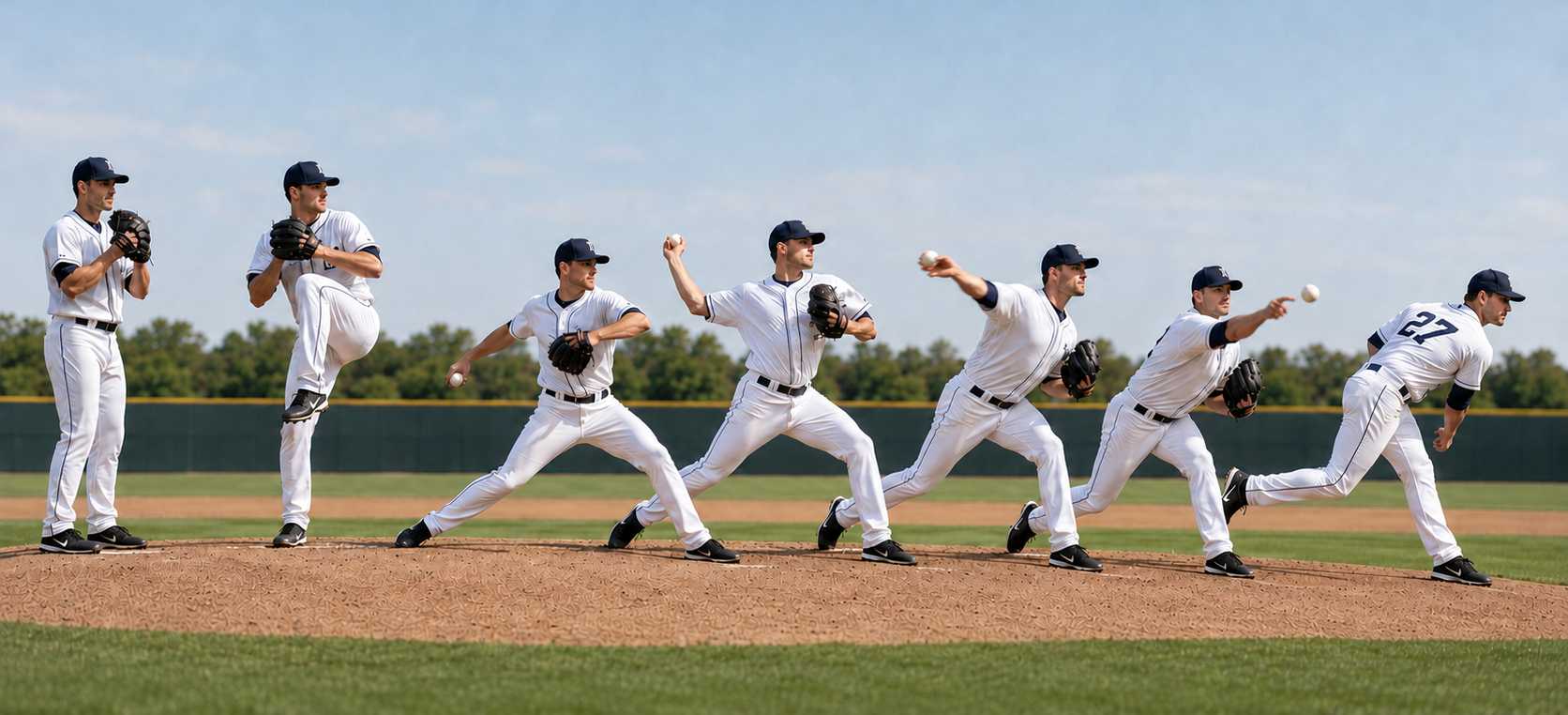
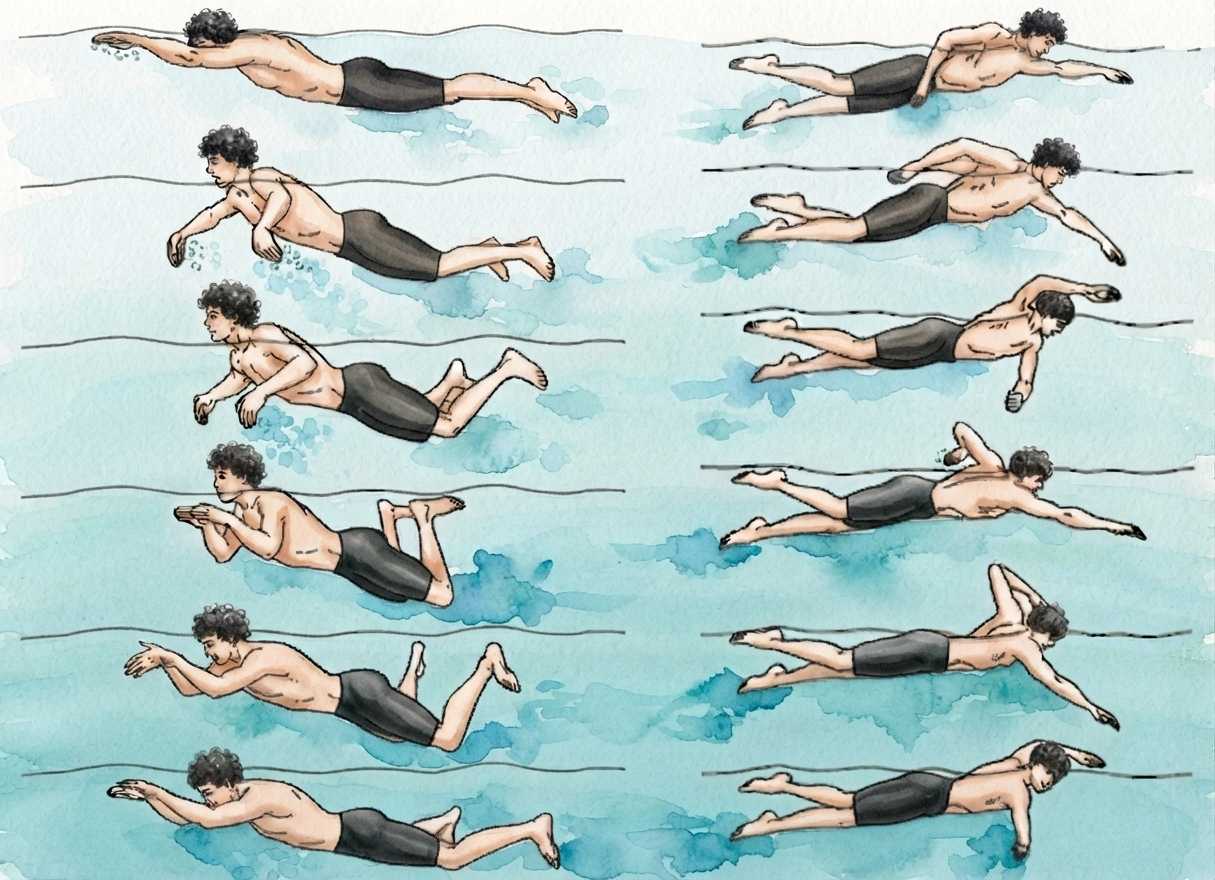
Looking back, this right-dominant asymmetry mirrors the patterns of tension I described earlier, the chain running down my right leg and the one from my left hip up to my left shoulder. I suspect both are at least partially related to being right-handed and growing up playing sports with a very handed nature, like baseball and tennis, rather than sports that move both sides of the body equally, like swimming. Years of favoring one side may have shaped not only how my body holds tension, but how my mind pictures the body.
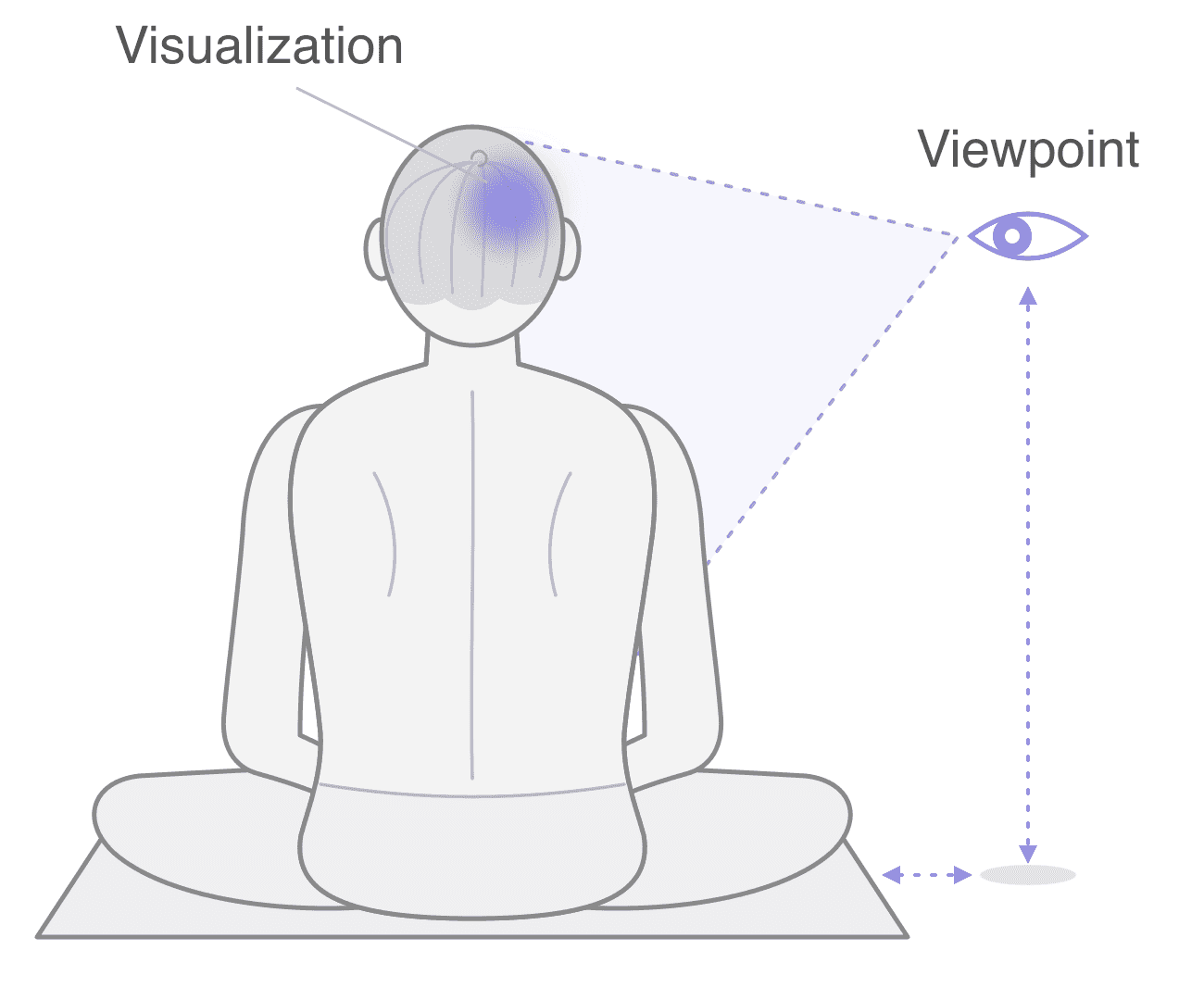
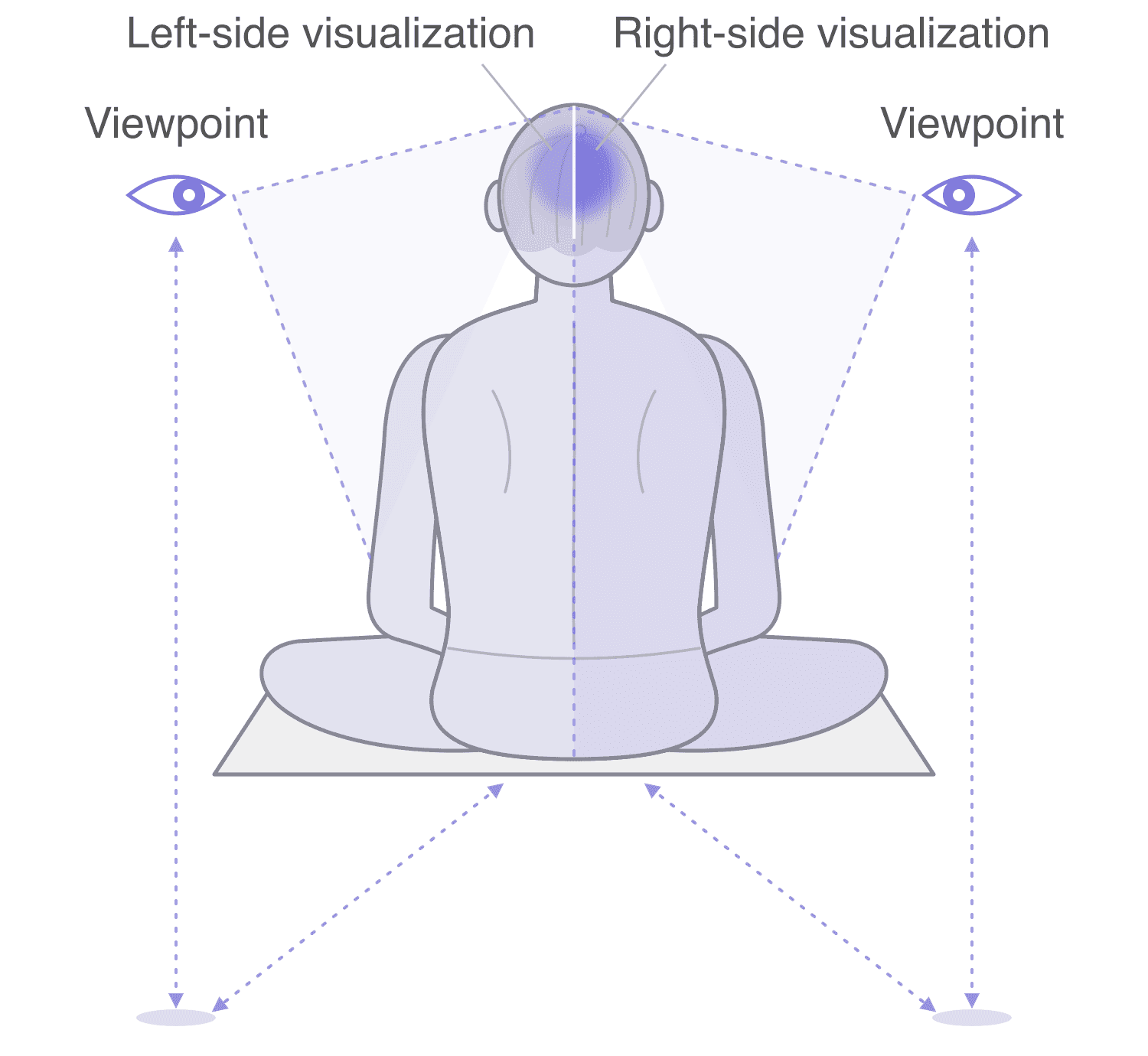
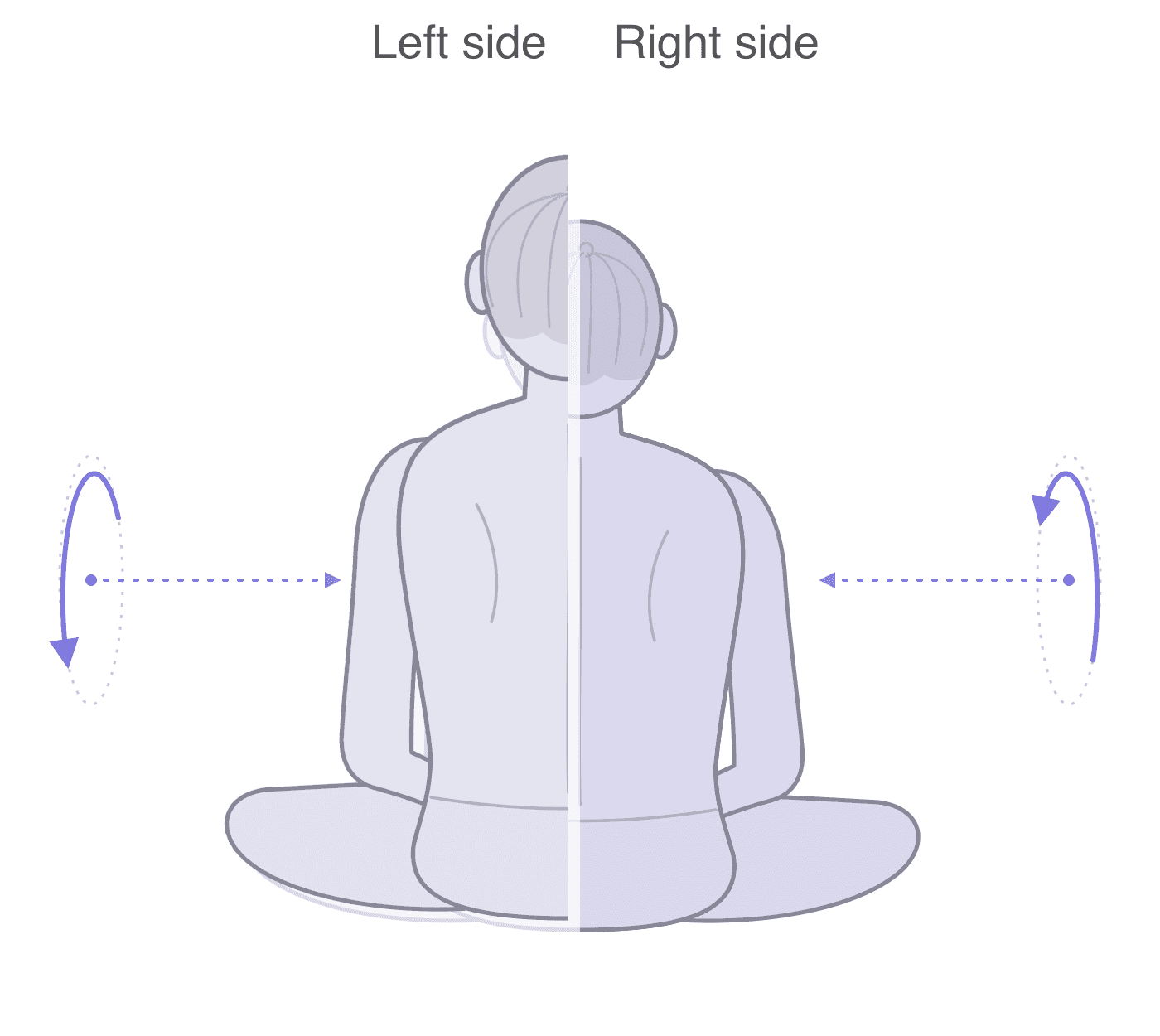
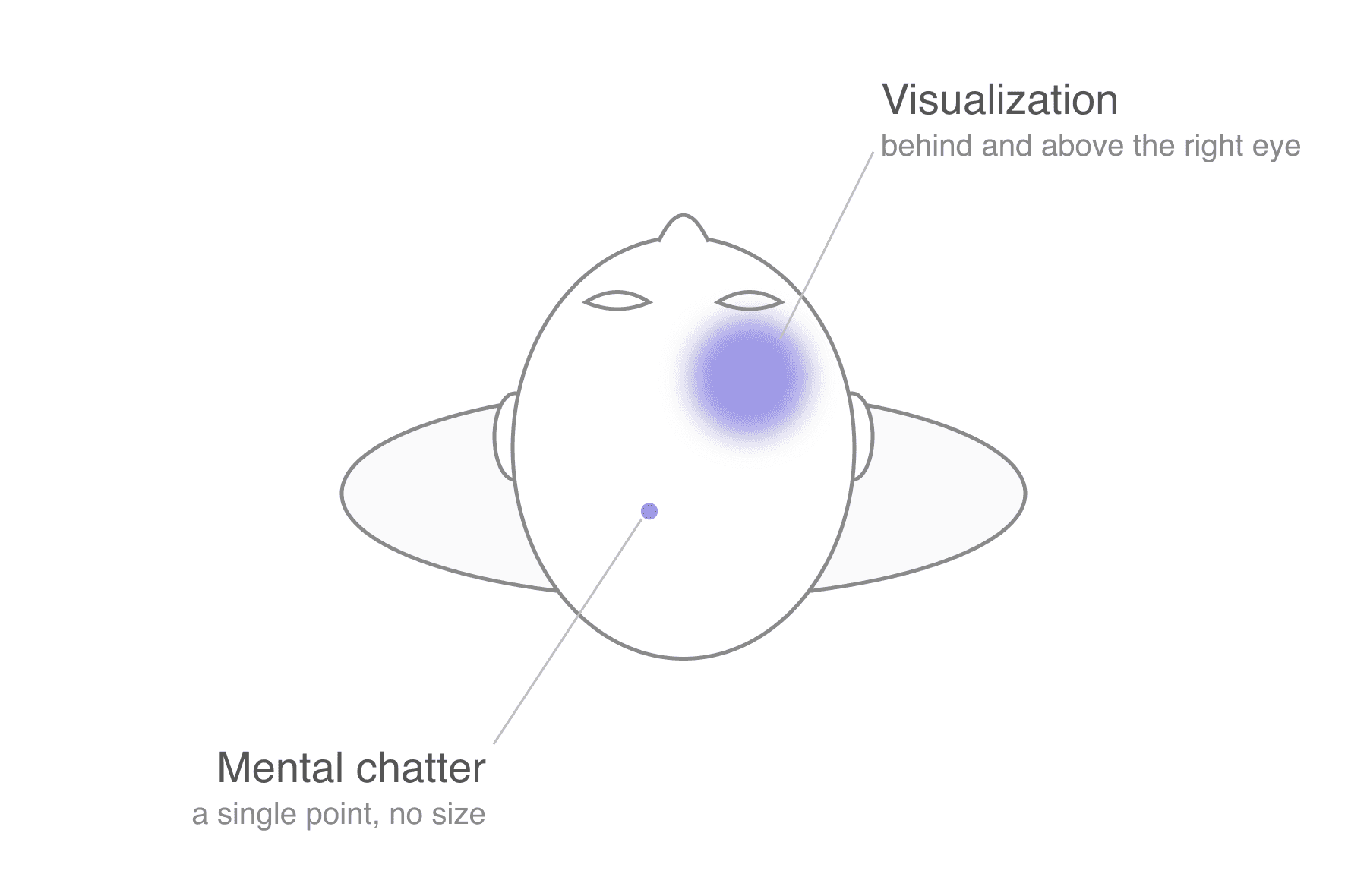
One of the first modifications I made to my body scans, then, was to visualize touching each region on the left side of my body with my left hand, and even occasionally scanning my entire body with my left hand. This was harder and slower, but it helped bring some sensation online on my left side. I also began to notice at this time that these visualizations existed predominantly on the right side of my field of awareness, somewhere behind and slightly above my right eye. The spatial nature of these visualizations only existed in the same sense that when asked where you exist, you likely have some idea of a spatial characteristic of your sense of self, somewhere in your head or chest, such that if you lost a limb, your sense of self would travel with the rest of the body rather than the limb. Biologically, the left side of the brain controls the right side of the body, so by no means would I say that these visualizations exist in the right side of my brain. I simply noticed that they exist on the right side of my field of awareness, again somewhere behind and slightly above my right eye. Furthermore, I also realized that these visualizations were typically of my body as viewed from my right side, as if my right eye had moved one meter to the right and then turned to the left to view the body, so even though I was visualizing using my left hand to touch each region of the body, it was as if the right side of my field of awareness still owned them. If I needed to visualize the left side of my body, I would just rotate my body 180 degrees while still viewing it from the right side of my mind's eye, rather than changing my perspective to the left side of my mind's eye. I've had this realization before in a weaker form while visualizing calisthenics movements I've worked on. For example, I might visualize myself doing a pullup as viewed from my right side before grabbing the bar and doing a pullup. Now, though, it was clear that I visualize myself from the right in nearly every situation, and that it's actually difficult to see myself from the left in my mind's eye, so I began to intentionally move the visualizations of the left side of my body into the left side of my field of awareness somewhere behind and above my left eye, and I also began to hold those visualizations in the left side of my mind's eye, as if viewed from the left side of my body. This visualization practice was a tough challenge, though it brought even more sensation online. It remains much more difficult to do than my right-dominant mode of visualization. I practiced this both in meditation and while exercising in my room during rest periods. An unexpected result of this retreat is that my handstand got steadier, purely because I started visualizing myself doing the movement as it would look through my own eyes, or even as it would look from the left side of my body, rather than always unconsciously defaulting to visualizing it from the right side of my body. It got me thinking that going forward, it might be useful to add a short body scan to the warm-ups of my workouts.
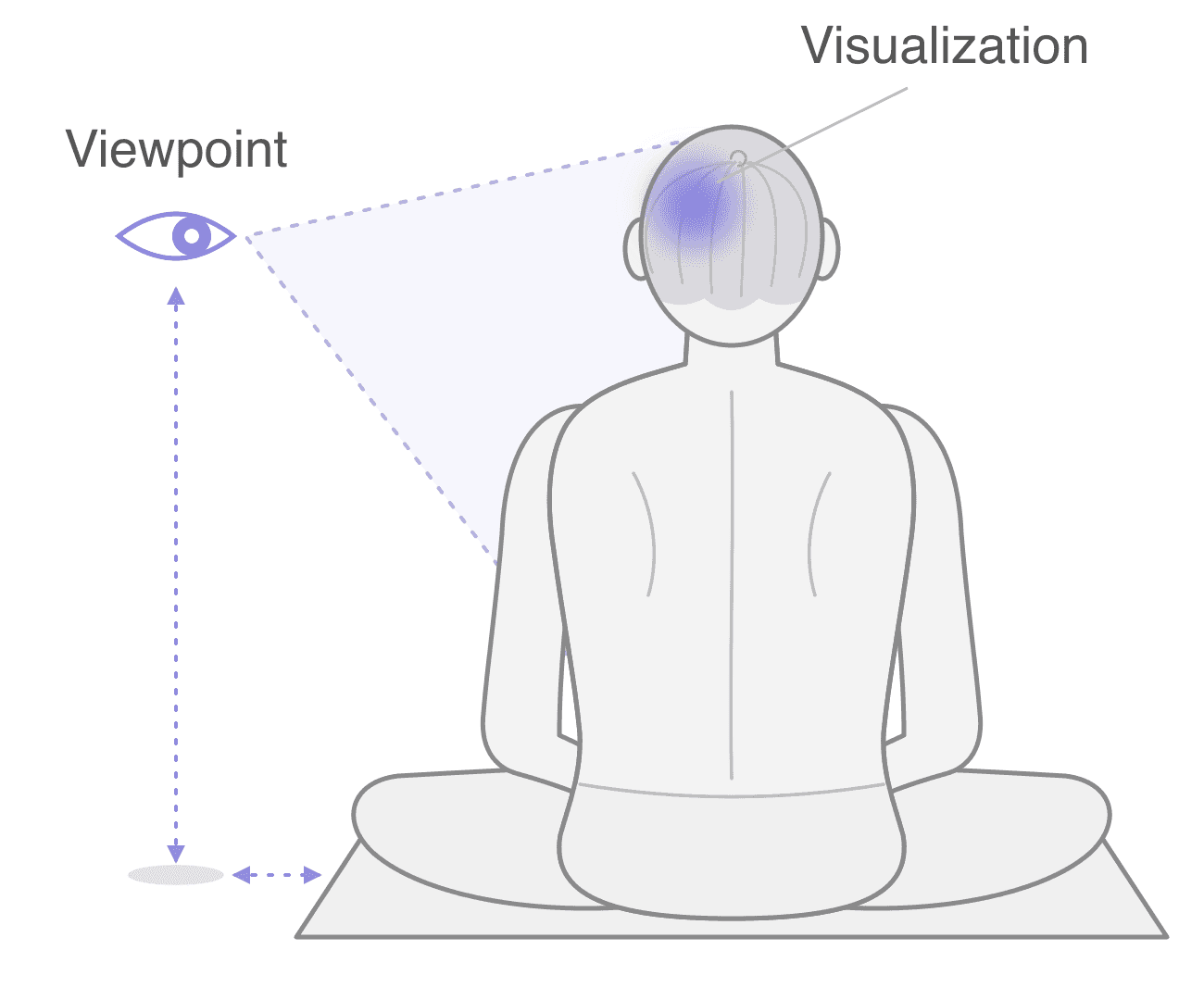
By day five, it would take me about 20-25 minutes to complete a full scan from head to toe while remaining mindful of my method of visualization. On day six, Goenka instructed us to attempt to scan the body symmetrically, sensing the left and right sides of the body simultaneously, for example to sense both ears, shoulders, or knees at the same time. This introduced a new challenge for me: to hold two different visualizations in mind at once, or to hold a single visualization directly in the center of my field of awareness, jointly owned by the left and the right. An odd experience began to arise in response to this. If, for example, I visualized the left and right sides of my back simultaneously, split down the center of my field of awareness, the left side of the visualization would sit slightly askew of the right side, like splitting a painting down the center, and moving the left side slightly higher, then rotating it 5-10 degrees toward the viewer. It was frustrating to notice that the faculties of my mind are not perfectly under my control. I imagine this experience is something like 0.1% of the difficulty that a severely autistic individual, with very poor motor control and limited speech, may experience on a day-to-day basis. I've heard that in some cases of severe autism, an individual may completely lack the ability to visualize their body, and my limited struggle in meditation gave me some empathy for how frustrating that must feel.
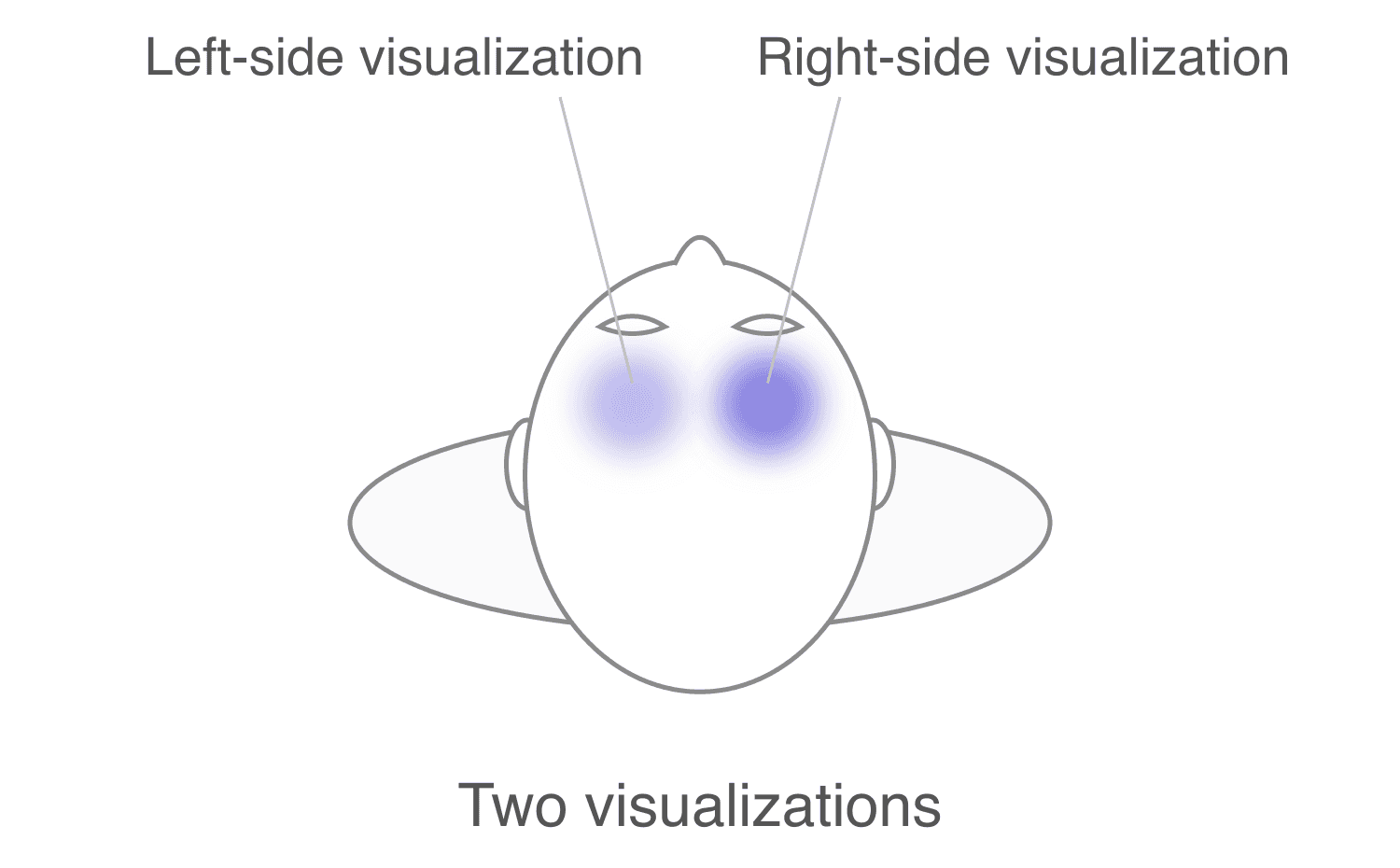
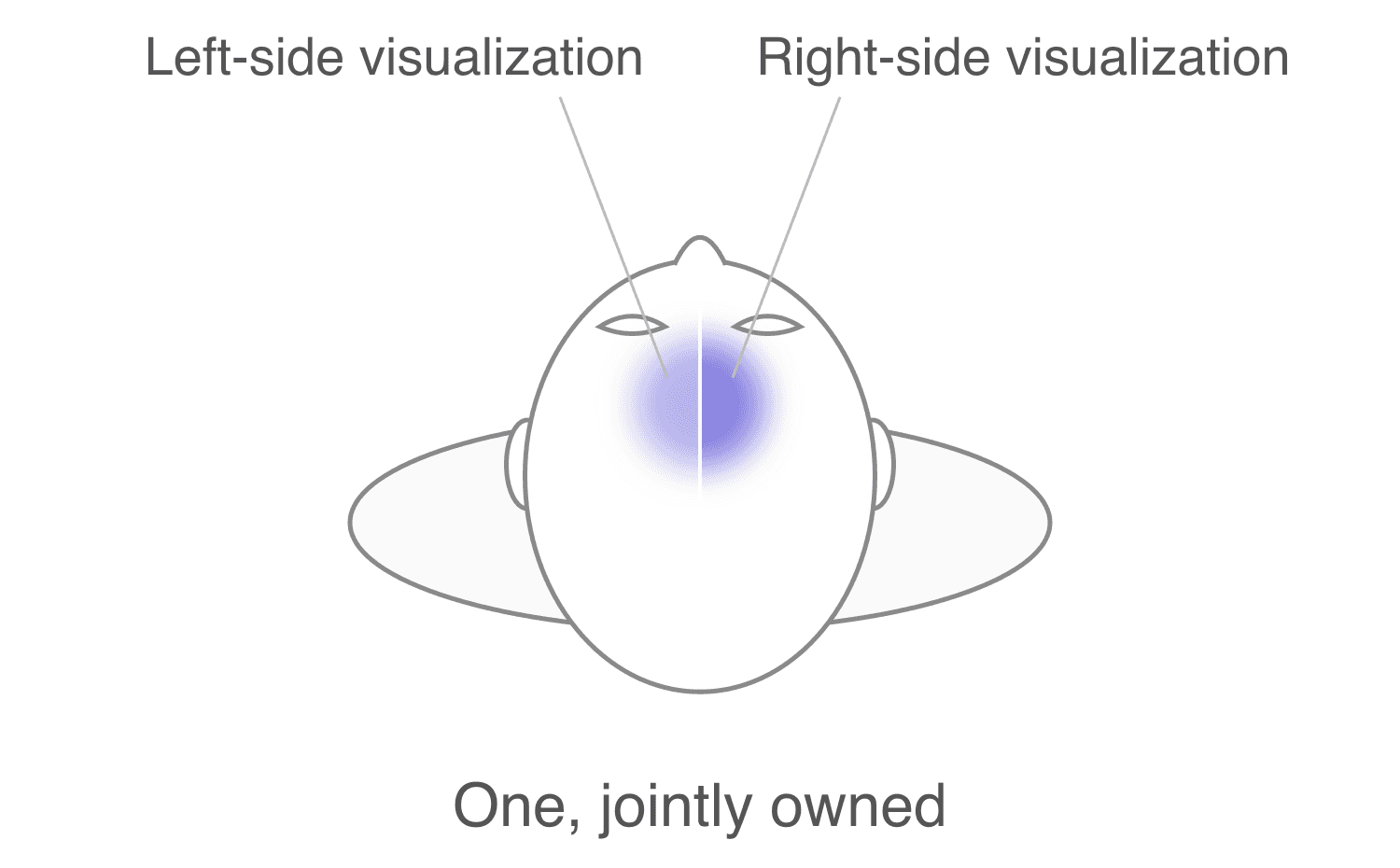
With Vipassanā meditation, it was clear almost immediately that my mind wandered less, simply because it had more to do. But it was also clear that my mind would sometimes wander while the body scan was still running in the background, albeit with a much lower level of awareness. When my mind was focused and the body scan was running in the foreground, I continued to notice mental chatter on autopilot. I noticed that the mental chatter had a spatial nature in my field of awareness, though it was less stationary than the default location of visualizations behind my right eye. It moved around somewhat, but was almost always slightly on the left side of my head, on average 65% of the way to the back of my head. A visualization seemed to fill a small region in my field of awareness, its size depending on what I was visualizing and from what perspective. Mental chatter, by contrast, seemed at any given moment to sit at a single point in space. There were a couple times my mind wandered and I caught myself in a moment recalling some past action I had taken involving speech or imagining some future one, and I noticed the visualization of myself was in the default location behind and above my right eye, while the speech component was simultaneously somewhere in my field of awareness in the left hemisphere of my head.
At this point in the retreat I had developed a few ways of dealing with the wandering mind. When I noticed the mind had wandered, in my head I would say "That's okay" or just "Yes" as a gentle acknowledgement that indeed the mind had wandered. Then I would return to the practice. Often, I would also visualize myself with my hands on my heart, the way you would when you empathize with someone who shares a personal struggle they're dealing with. I call these mental devices: tools that gently slow the currents of craving and aversion. Crucially for me, all three devices helped me generate a subtle sense of compassion for myself in the moments I had noticed myself failing at the practice. Here's an example of what it looked like:
the mind wanders
"I should do [fill in the blank] after this retreat is over."
"Heck yeah, what a great idea."
"Time to start planning this out."noticing the mind has wandered
"Shoot, I'm distracted."
"Am I getting worse at meditating?"
"Damn, I'm getting worse!"noticing the mind is still distracted and visualizing my hands on my heart
"That's okay."
the mind returns to the practice
Realistically, my mind would typically wander for one to two orders of magnitude longer than it does in this example. Yet, this very short example still contains at least two discrete moments of craving and at least two discrete moments of aversion. Again, Goenka disallowed intentional verbalization and visualization in our meditation, so verbalizing "yes" and "that's okay" and visualizing myself with my hands on my heart may have been technically out of alignment with the core technique of Vipassanā, but I felt confident enough in their utility to continue on with them. My sense is that reactions of craving and aversion come so fast and in such quick succession that the beginner is only equipped to notice them at the gross level as patterns over time — what I refer to as currents. Mental devices help slow these currents once they've been noticed.
Occasionally, though, it's possible to catch a single reaction as it forms, because there is a gap between a sensation and the mind's response to it. Johnson puts a number to it in the opening paragraph of his vasocomputation paper. He notes a delay of somewhere between 25 and 100 milliseconds between a sensation and the craving or aversion that follows. Perhaps the highly trained mind can notice this gap consistently, but at least for the beginner, I imagine it's quite rare. It happened to me three times during the retreat.
The first was on day seven while I was walking out of the meditation hall after the 1-2:30pm sit. The meditation hall sits on the second floor of the main building on the grounds, above some of the students' rooms. There are about 15 steps up to the entrance, and it faces the dining hall where the filtered drinking water is. I had developed a habit of walking down the stairs and straight to the faucet immediately after each meditation, then splashing water on my face, taking a small drink, and dripping some cold water down the back of my neck to wake myself up. This was especially useful in between back-to-back sittings. On this particular occasion, I was looking at the ground, and a few moments after walking down the steps I looked up at the dining hall. I noticed I was less than halfway there, and an instant later a negatively charged judgement took form in my mind. It had no verbal component to it, but it roughly translated to the feeling of too far!
The other two instances happened during meditations. One was when a rooster crowed, and a split second later my mind grabbed onto the concept of chicken. The other happened when a bird flew close to the window and the echo of its fluttering wings sounded like a person shuffling quickly behind me. My mind first jumped to the concept of person moving behind me and a split second later jumped to bird near window. Neither of these latter two cases had any verbal component either. They were like the mind grasping the concept itself, the way you can briefly hold in mind the idea of gratitude without saying the word in your head or picturing someone feeling it. When the bird flew by the window, I didn't perceive the two judgements (person moving behind me and bird near window) as building on one another. It was as if they were independent processes fired at or near the same time in my brain, and one took slightly longer to return a result, the correct result of bird near window. Perhaps the mental pathway of person behind me has evolutionary reasons for running quicker and occasionally returning false positives.
My reaction to the first case, while I was walking to the water station, was clearly an aversion, but it's not clear how my reactions in the other two cases could lead to suffering. Never at any point in the retreat was there discussion of judgement, or the way the mind labels, orders, and characterizes its experience. The focus was fully on craving and aversion, but on multiple occasions in the past I've encountered Buddhist literature and teachings espousing the idea that the judging mind is the same part of the mind generating craving and aversion, for example "This course is good", "That person is bad", or "If I do X I'll gain notoriety". In the latter two experiences (the rooster's crow and the echo of the bird's wings), my mind's reaction seems like a neutral judgement of what the thing was, so maybe Buddha was only teaching a method to purify the mind of judgements with a positive or negative charge, as they are perhaps the ones made up of craving and aversion. On the other hand, perhaps at a very subtle level my judgements in both cases were a manifestation of a craving for order and control, the inherent evolutionary necessity to make sense of the world we live in. That said, if this really is the case, and Buddha's path leads to the cessation of this feature of the mind, then I'm not sure how he himself would have recognized his own acquaintances.
Questions like these remind me of ideas from Daoism (also spelled Taoism), the ancient Chinese philosophy that later evolved into China's folk religion. Its founder, Laozi, likely lived around the same time as Buddha but about 500 years before Buddha's teachings reached China. Once Buddhism reached China, the vocabulary of Daoism was used to translate Buddhist concepts, and to this day Daoist concepts have a strong influence on Buddhism in China, Korea, Japan, and Vietnam. This type of functional translation happens all the time, matching the most closely associated concepts between two languages. Early Christian teachings, as they spread to the Greek-speaking world, adopted some of the vocabulary of Stoicism, and even in the modern day, when Buddhism reached the West, we used Christian terms as translations of Buddhist ideas. For example, we call a Buddhist individual who lives in a temple and meditates all day a monk, and we call the head of this temple an abbot, both concepts from Christianity that most closely fit the cloistered, reclusive nature of religious fellows dedicated to intensive internal practices. All of this is really a story about the limits of names, which is where Laozi begins in the foundational text of Daoism, the Daodejing:
The way that can be spoken is not the enduring way.
The name that can be named is not the enduring name.
Nameless, it is the origin of heaven and earth.
Named, it is the mother of the ten thousand things.
I've always read this as a critique of the judging mind, as if pointing to a recognition of the fact that in reality, behind every rooster's crow there is a unique set of vibrating particles — never again to be expressed in the life of the universe — arising and passing away in the present moment, but the mind clenches to identify and categorize every sensation into a named experience ("the ten thousand things"). Maybe even naming is a subtle form of craving, and it somehow cuts us off from the divine, cosmic nature of the present moment ("the origin of heaven and earth"). Perhaps this is the insight Buddha was pointing his followers toward: an embodied recognition of reality as it truly is. That's only a guess, though, and it never came up at the retreat.
On day eight, Goenka spoke of the benefits one might experience after returning to the world, and he used the example of a day ruined because of some unfortunate event in the morning, saying that what may have caused you to stew in anger for eight hours before may only bother you now for six, and that's two hours of your life back. This, to me, says clearly that the job of the beginner truly is just to notice and slow the currents of craving and aversion at the gross level, rather than to notice each individual microclench of craving or aversion in response to sensation. The beginner might still carve the grooves of saṅkhāra, but less deeply than before.
This is exactly what mental devices help the beginner with, like saying "that's okay" to oneself when the mind has wandered. My guess is that mental devices come with a cost, though. A verbalized mantra or a visualized deity isn't a neutral object, and perhaps no mental device is. If even naming is a subtle form of craving, as the Daodejing seems to suggest, then it may be there are no neutral judgements. Every word, image, or idea would be a persistent, subtly charged clench with its own groove of saṅkhāra. A mental device is a bundle of them, so using one repeatedly may carve a groove of its own. But that groove would be relatively shallow, and for the beginner, trading a strong current of craving and aversion for a weak one seems like a good deal. It's like filling the trunk of your car with gas cans. The weight of the gas itself will reduce the car's gas mileage, but if distance is your goal, the gas cans will carry you a lot farther than a single tank.
These devices exist everywhere, and in many cases they are deeply embedded in our cultures. Consider the idea that God is the final judge and that we cannot know the content of another person's heart. True or not, if one believes it, they might more easily catch themselves in a moment of adoration or disgust toward another person and more easily stop themselves from carving a deeper pattern of attachment or anger toward that person. Then there is the idea of taking your burden — whether it be relational, psychological, or physical — and placing it on an altar, giving it up to a higher power. You may still hope that it goes away, but you accept it may continue, because you've given up responsibility for it, trusting that your higher power will do with it as it sees fit. This means you can stop reacting to all the ways it manifests in your life. If it manifests, so be it. You have peace about it because it's no longer under your control, and perhaps it never was to begin with.
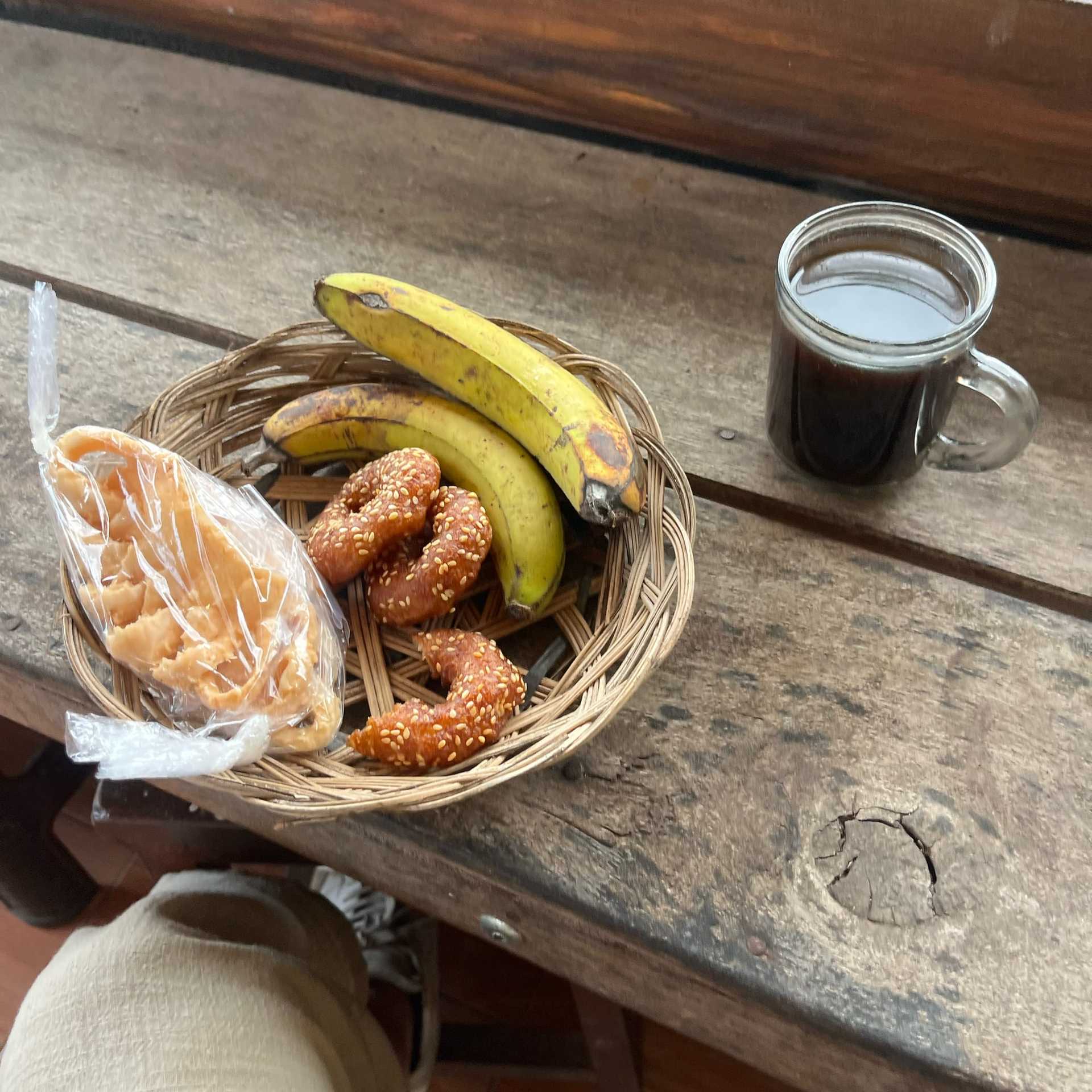
As I write this, I'm looking out over a rice field from a warung in rural Bali, a modest restaurant run out of a family's home. I'm the only customer here, and I spent two US dollars on lunch and coffee. The family's father just returned from the temple, told me to treat his home as my own, and offered me an assortment of treats that were just used in a religious offering. This food is known as lungsuran, food given to the gods, returned as a blessing, and often shared. Say what you will about his belief system, but it's hard to deny that a ritual like this appears to train generosity, so that the grooves of saṅkhāra carved by the currents of greed stay shallow.
Even entire psychological frameworks can act as mental devices. The field of psychology famously has no single view of the universe. It has many competing theories of how the psyche works, and I would argue that most fall into the category of useful-but-not-literally-true. Consider the psychological framework Internal Family Systems (IFS), also known as parts work, which suggests one is not a single self but a collection of selves (i.e., parts), and that at any given time, one of these parts sits at the fore, like when a family reunion brings out old patterns of one's teenage years. IFS is a weaker version of Buddha's claim that the self is an illusion. It says that there is simply no single or constant self. Whether IFS is ultimately correct doesn't change the fact that it's useful. Suppose someone has spent years carving the patterns of their work-self with long, intense hours at the office. That part craves efficiency and control and recoils from anything unplanned. When that self comes to the fore at home, it pushes back against a partner's spontaneity and can ruin an evening. With parts work, they might catch themselves and think, "Oh, that's my work-self", and just naming it can be enough to slow the current of aversion. Parts work can also naturally engender self-compassion, which slows a second current: aversion toward one's own reactions. If one views oneself as made up of multiple selves, they're more likely to treat each part as they would others, with basic respect and courtesy, rather than meeting the work-self's reactions with more resistance. Imagine a hired porter on a wilderness expedition. Just as they clench their body while hauling baggage, a proponent of IFS clenches their mind while hauling around the concepts and ideas of the framework, each having a psychological weight of its own. But ultimately, these concepts and ideas keep them from carving the grooves of saṅkhāra as deeply as they otherwise would.
About eight years ago I spent ten days at a Catholic monastery in Big Sur, California. The monks there spent their days praying, singing, and performing the Eucharist. But mostly they prayed. One of them explained to me that dogma, despite its bad reputation, is a tool on the path to union with God, something one uses in order to eventually go beyond it. For a Catholic, this is a bold statement, though it has deep roots in the church's mystical tradition. At least as his tradition sees things, the Catholic dogma is a set of beliefs that point one in a direction of transcendence, where, amongst other things, the concept of belief itself becomes irrelevant. In my own words, it's like a hiking trail. It may subtly cut you off from the raw essence of the wilderness, but it gets you into the woods to begin with. The backcountry isn't typically at the edge of town. To reach it, you often have to start on a trail. Some mental devices may work this way, as shallow grooves of saṅkhāra worth carving so that one day they, too, can be left behind, like empty gas cans on the side of the road.
Buddha, at least as he's rendered by Goenka, was a puritan about mental devices. Say, for example, that you find yourself in a deep pattern of aversion in meditation. A quick petition to your god may help you find the strength to stay calm in stormy waters. Perhaps even just a brief visualization of your god could do it. But to Buddha, it apparently didn't matter how helpful this might be, or whether or not your god is even real, because, as I mentioned previously, mental devices seem to invariably introduce subtle forms of craving into the practice. To Buddha, the cost wasn't worth it. Goenka explained that Buddha prescribed ānāpāna and Vipassanā meditation because simply observing the breath and the sensations in the body brings nothing to the practice beyond what is already there. Hence the prohibition on verbalization and visualization, as well as the request that all students cease other religious practices and turn in any religious items for the duration of the course. So Buddha had the same outlook as the porter on a wilderness expedition: if you have to keep clenching to hold it, it must be baggage.
And the only way to get rid of this baggage is to drop it — to unclench. A groove of saṅkhāra begins to dissolve when we stop reacting to its triggers with craving and aversion. This is easier said than done. If we've been carrying the baggage long enough, it may seem to be a part of who we are, like the hunched back of the porter years after retirement. In this case, dropping the baggage could even feel, from a psychological standpoint, like an experience on the spectrum of dying.
An analogy occurred to me during the retreat for what this process of dropping baggage might look like in practice, inspired by Stanislav Grof's observation in his work with altered states of consciousness: as difficult material surfaces, tension often intensifies before it releases. The analogy comes from geology. Certain minerals, such as aragonite (CaCO3), form deep underground under high pressure yet persist at the earth's surface, even though the very same atoms could just as well be arranged there into a lower-energy crystal structure — in this case calcite (CaCO3). Both minerals are made of calcium carbonate, but aragonite is locked into a higher state of free energy (loosely akin to potential energy), because there is a necessary level of activation energy required before it will spontaneously repackage itself into calcite. For this reason, aragonite is known as a metastable mineral, as it will hang around until it is exposed to a sufficient level of external energy (heat) in order for its transition to the stable mineral calcite to take place.

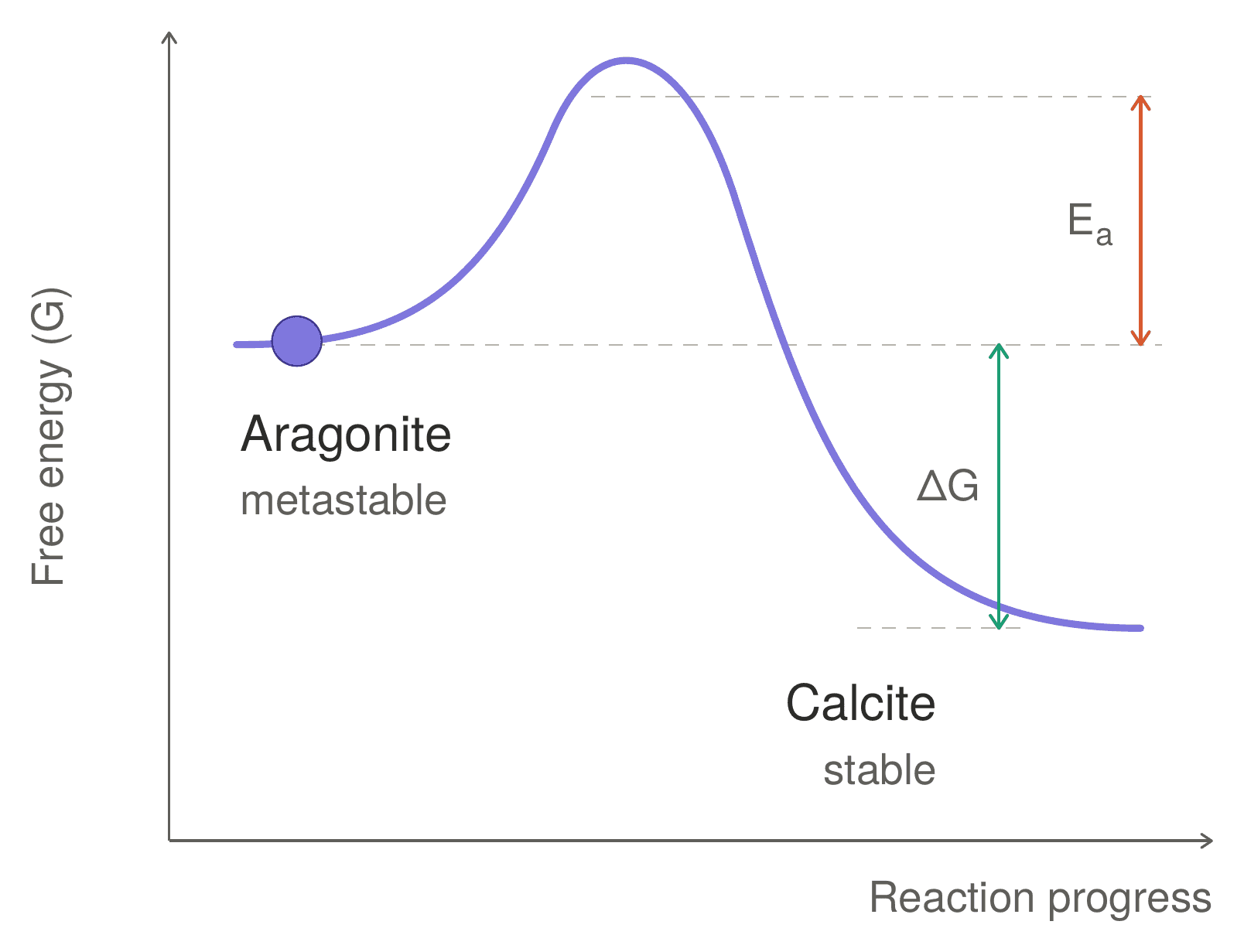

Goenka's sand and stone map neatly onto this picture. A groove in sand is a shallow well with a small hump beside it. A groove in stone, like trauma, is a deep well behind a mountain of activation energy. If a traumatized state of the body and mind is like being locked into a metastable state, then the triggers of that trauma are like heat that raises the energy of the system. Every time one clenches to resist the sensations those triggers bring, it's as if they lower the temperature. The system settles back into its metastable state, and the activation energy needed to eventually slide downhill to the stable state grows. In Goenka's terms, each reaction carves the groove of saṅkhāra a little deeper. His remedy is simply to observe the sensations without reacting to them with craving or aversion. If one learns to do that, then the heat can rise. Things may become temporarily more uncomfortable, as they do for the traumatized veteran re-experiencing their worst memories on psychedelics, but that discomfort may be what is necessary for healing, setting off a spontaneous release of energy the system has been holding onto. This seems to be the same essential wisdom behind the advice to "face your fears" and the suggestion that, in the end, one may find they were all paper tigers. It also underlies old sayings like "the darkest hour of night is just before dawn" and "the only way out is through", and Carl Jung's observation that "Neurosis is always a substitute for legitimate suffering".
Goenka taught that when one stops generating new saṅkhāra, the old stock of saṅkhāra naturally begins to rise to the surface and dissolve, noting that sometimes a particularly strong saṅkhāra can arise, bringing with it gross sensations that can challenge the equanimity of one's mind. Goenka never gave a concrete example of what this might look and feel like in practice, but he did seem to hint at it. In one evening discourse he pointed out that Buddha instructed his followers to focus on the sensations of the body because it is often too difficult, at least for the beginner, to focus on a sensation like anger. Instead, one can simply notice the changing nature of their breath, their pulse, or the temperature of their skin as a difficult experience arises. So perhaps rising saṅkhāra are like rising heat, carrying the same pattern of clenching that carved the groove in the first place, implying a subtle sort of reliving or re-experiencing as described by Grof's COEX systems and bringing emotions like anger, lust, or pride to the surface. If this is true, the Buddhist path is one in which the mind continually passes through successively lower-energy metastable states, so to speak, but only after first passing through each state's requisite increase in activation energy[10].
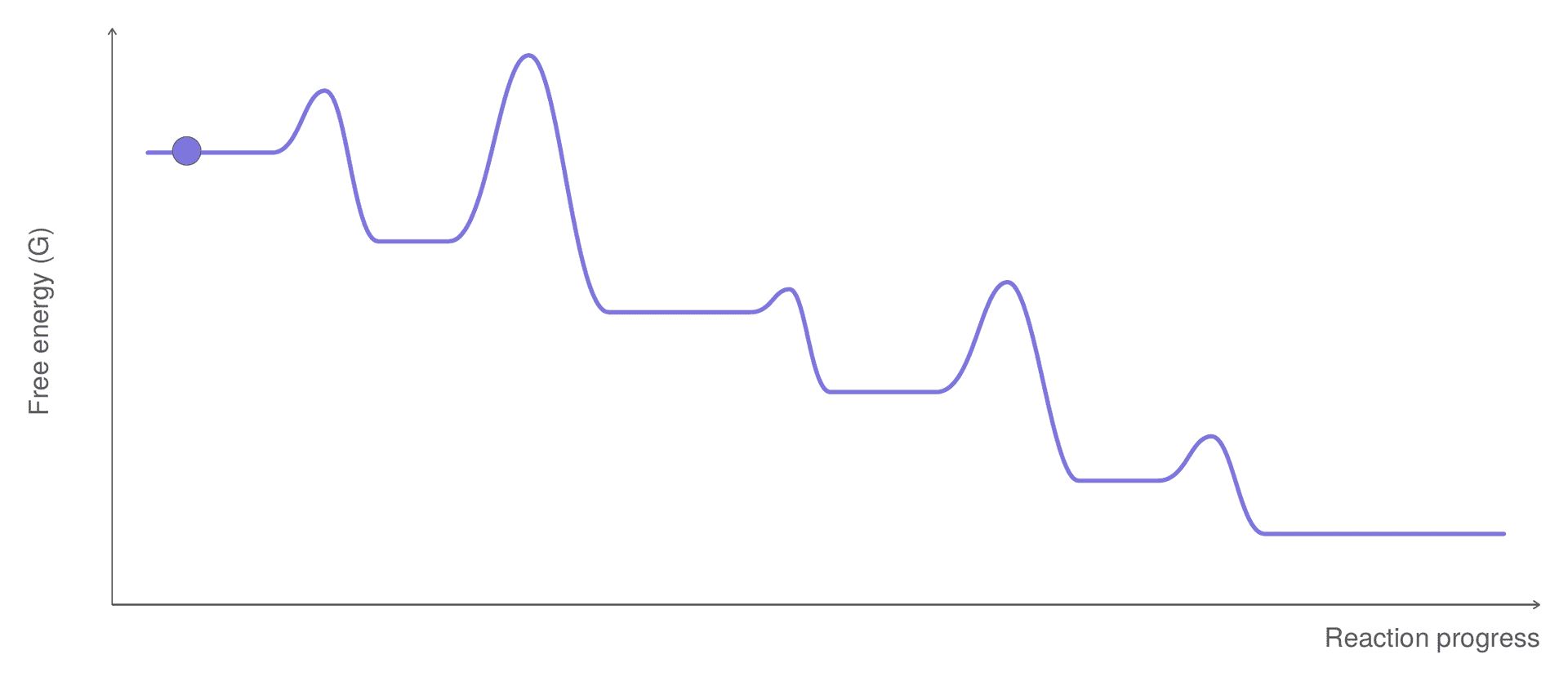
I believe this process of the heat rising before release is exactly what happened with my right leg throughout the retreat. By days five and six the pain was still present, though diminishing. In the group sits, there was now an expectation of adhiṭṭhāna, or strong determination: to sit still for the full hour, without opening one's hands or eyes, and without changing one's posture. I was now able to sit still for an hour, only occasionally straightening my back, unrounding my shoulders, or picking my head up. I was still rocking a bit by the end of some of the longer non-group sits to keep the pain at a manageable level. I also experimented with removing cushions from my setup. This would increase the pain, but it was now more bearable than before, so it was easier to keep the pain below my threshold of reactivity. I got down from five cushions to two cushions at one point, sitting in a much tighter butterfly pose, but eventually added one back to the stack and kept the setup with three cushions for the remainder of the retreat.
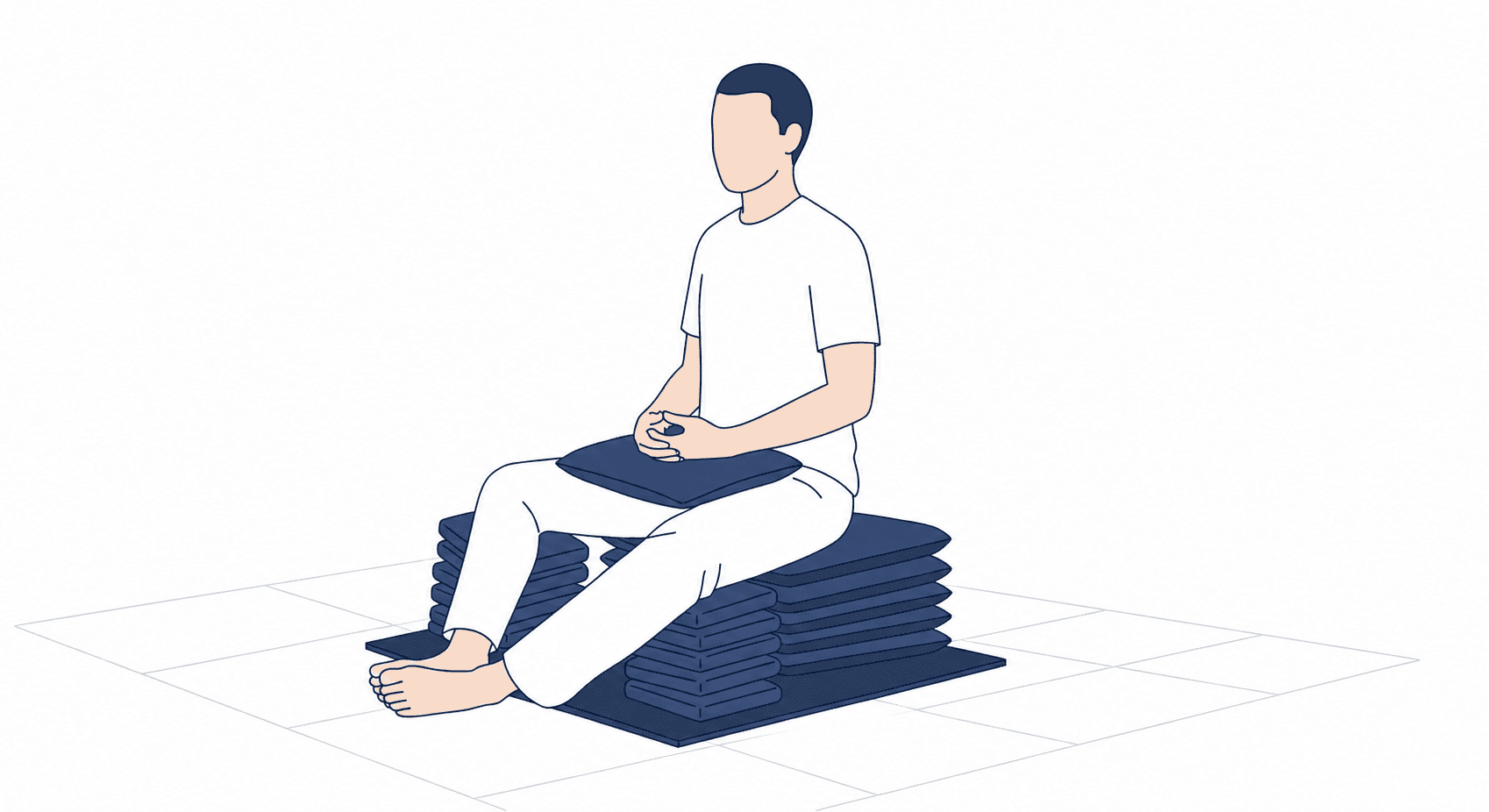
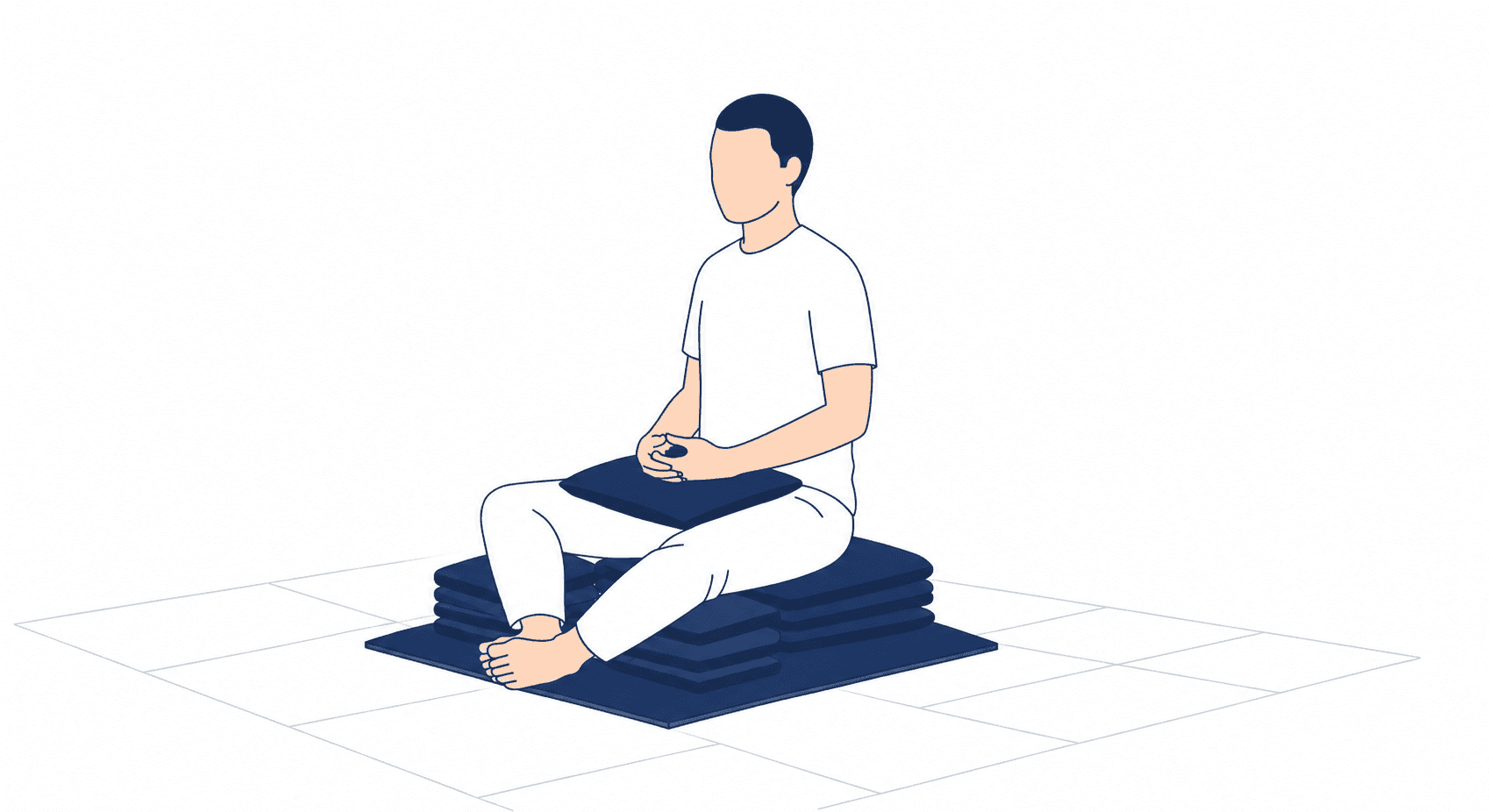
On the morning of day five, I found a note at my spot in the dining hall asking me to meet the assistant teacher in the meditation hall after lunch. When I went in, she asked me if I was experiencing any problems. It was a very open-ended question, but I assumed she might have noticed my intense rocking on the morning of day four or my moderate rocking since then in the non-group sits. I told her I wasn't experiencing any problems per se, but that I was experiencing a lot of pain in my right leg, which felt like a good thing since there was some physical relief associated with it. She didn't say much in response, but she encouraged me to take breaks during the non-group sits, especially the longer ones, even just to step out of the meditation hall for a few minutes. Her reply lasted about a minute, and in it she said three times, "Equanimity is most important". Equanimity is the state of mind in which one does not want any sensation either to continue or to cease. Generally, this means not wanting positive sensations to continue and not wanting negative sensations to cease. Whether or not my teacher knew exactly where my head was at this point in the retreat, I felt like it was exactly what I needed to hear. I realized I was actually craving for the pain to continue. I was craving for the opportunity to continue to work through the tension in spite of the pain because the relief that followed felt so good. I was gritting my teeth and muscling my way through the long meditation sessions, and I was also developing a bit of pride, noticing at the end of the non-group sits how few others remained in the hall.
I began taking 5- to 10-minute breaks during the long sessions and noticed that my mind stayed much more relaxed, even outside of meditation sessions. This got me thinking about the way that pain can be an impediment to equanimity. It is possibly the most gross sensation of all, and it tugs hard on the mind. This reminded me of something my college yoga teacher used to say about pain. Before he was a yoga teacher, he was into adrenaline sports, and a serious downhill longboarding accident (think 60+ mph on a skateboard) left him immobilized for months. In his hospital bed he read the Yoga Sūtras, the foundational text of the spiritual path of Yoga in Hinduism, which is similar in many ways to the path laid out by Buddha. As a yoga teacher, he would constantly say, "No pain", stressing, in his words, that "if at any point you feel pain from the practice, then you're not practicing yoga and you should reduce the intensity".
Around day six, Goenka started to refine the Vipassanā meditation instructions, having us scan the body head to toe and then toe to head. He acknowledged that by this time many of us would be feeling a subtle tingling sensation throughout the body, but he instructed us to treat it no differently than gross sensations, simply observing the tingling and moving on. I was definitely feeling this sensation, and I'm fairly confident it's the same sensation as ASMR. As a kid, I would feel this same tingling sensation on the back of my head when my school teachers would drone on in monotone about a topic I already understood. The tingling sensations felt very similar to the way that qi (also spelled chi) is described, the energetic life force of traditional Chinese medicine (TCM), said to circulate throughout the body. The difference is that in Vipassanā meditation, awareness moves rather than the tingling sensation. Yet, there's a saying that "qi flows where the mind goes" or "where the mind goes, energy follows", so maybe what I was feeling is actually the same thing TCM describes as qi, and the difference is just one of perspective.
Goenka then began instructing us to sweep our awareness across the body en masse (all at once), suggesting that we could even, if possible, sweep head to toe in a single exhale and toe to head on a single inhale. We could also sweep the body en masse side to side or front to back, and could even include an awareness of sensation on the inside of the body in addition to the surface. I could sweep the body en masse but only very slowly, and I couldn't do it with an awareness of the inside of my body. I visualized a rectangular plane passing through my body, and focused my awareness on all the points of the body intersecting with it in any given moment, just as if I were sitting in a pool with a continually falling and rising water level, focusing my attention wherever the surface of the water was touching my skin. Sweeping the body en masse always left more blind spots than scanning part by part, since my attention was spread thinner.
Even before we started sweeping the body en masse, I noticed I needed a rhythm to keep my awareness moving along smoothly, and I inadvertently started to verbalize the sound of a drum as I moved my awareness region by region. By the time we started sweeping en masse, I could reliably feel my pulse on any region of my body. It became the perfect metronome. With each heartbeat I would move my imaginary rectangular plane about a centimeter or so through the body. If there was no pain in the focused areas, then I would often feel my pulse and a uniform tingling sensation for a split second before moving my awareness on the next beat. In one meditation, I moved my awareness to my entire body, and for a few moments was able to catch the sensation of my pulse over the entire surface of my body simultaneously, noticing the slight delay as it moved from my chest outward.
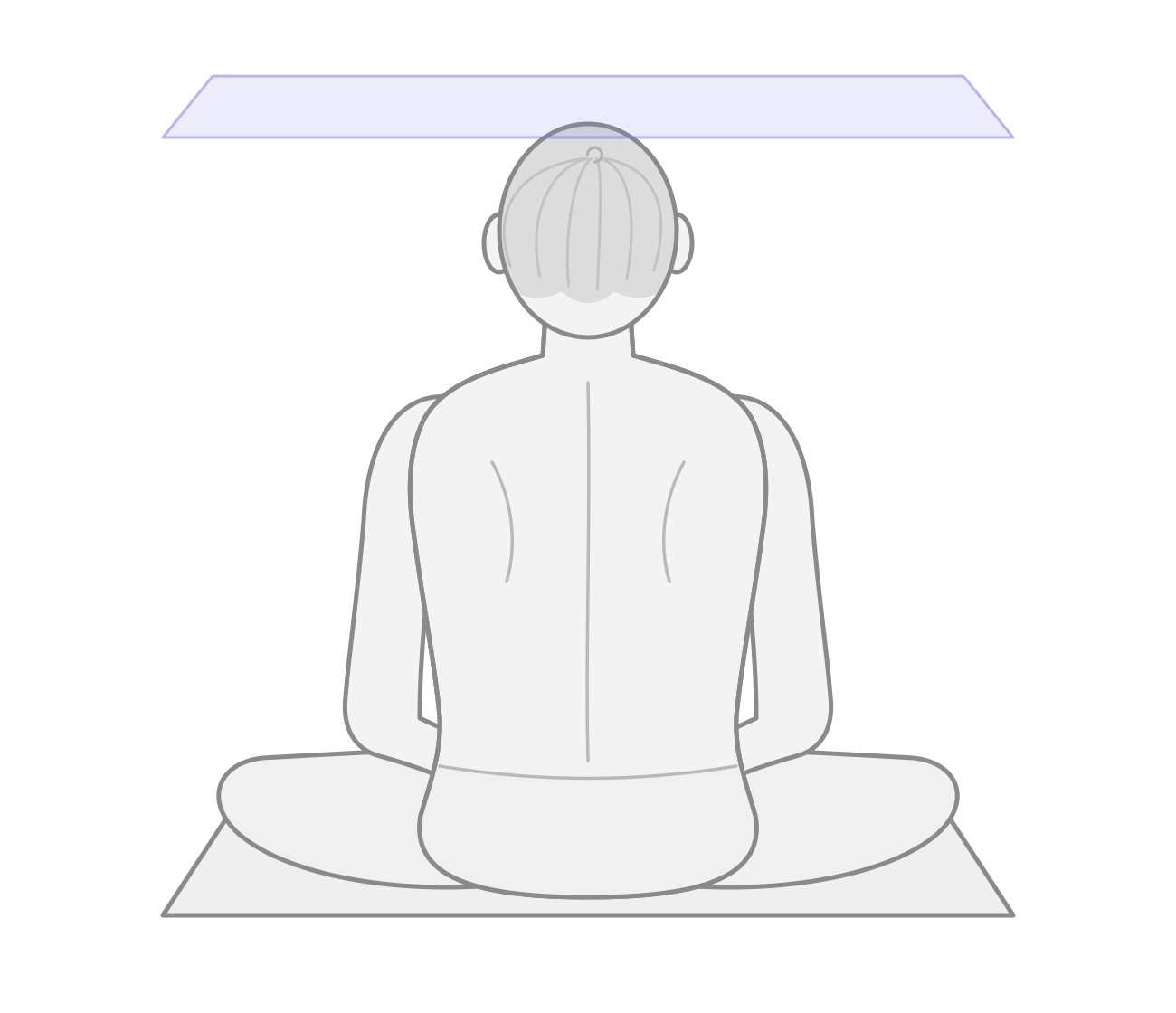
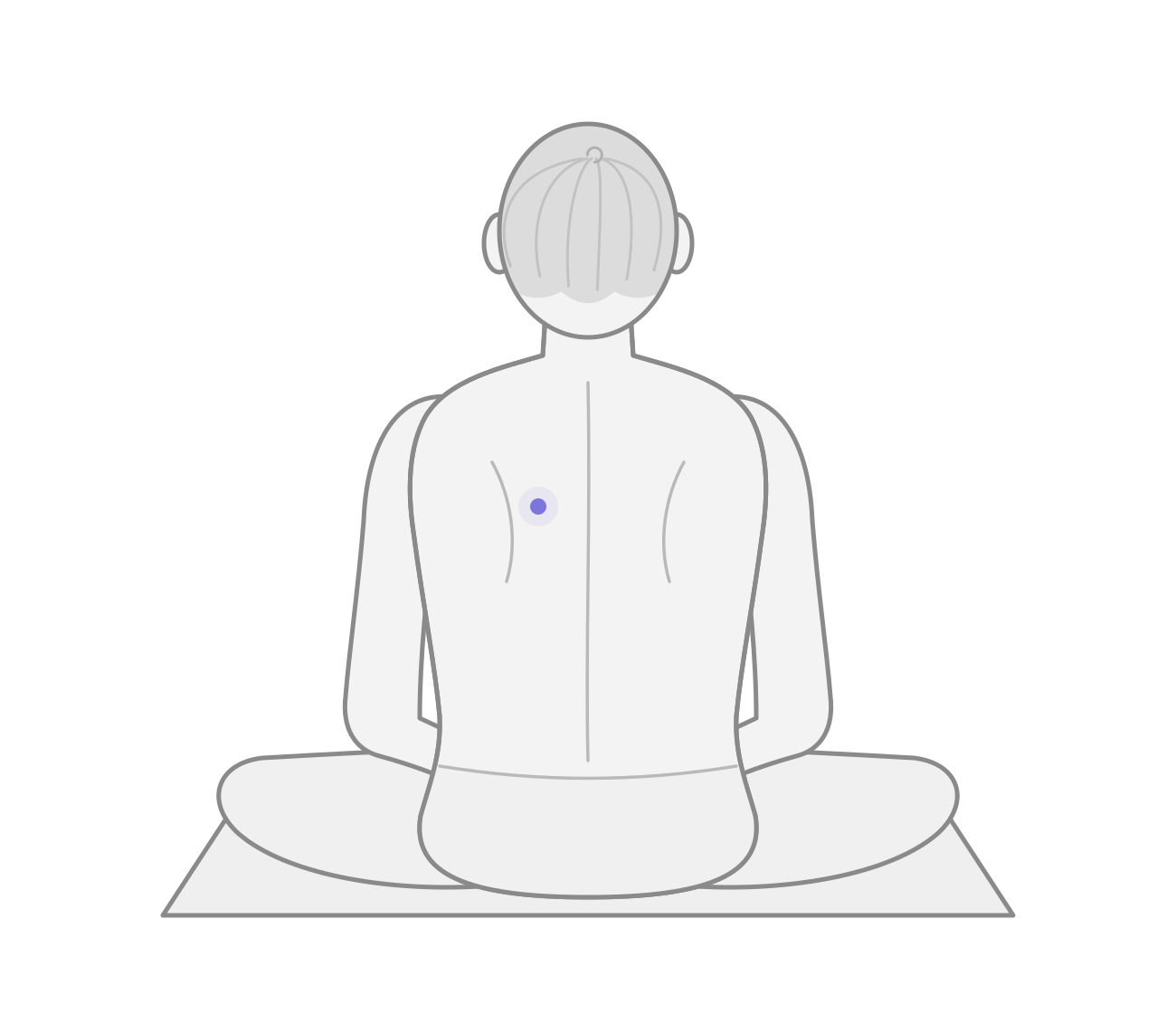
On the days we swept the body en masse, we were still instructed to occasionally survey the body part by part, paying special attention to the blind spots. At this point I would take over an hour to scan head to toe and toe to head, surveying smaller and smaller areas of the body as my focus sharpened. I gradually stopped visualizing touching each part of the body and began visualizing a small circular plane on the surface of the skin, like the light of a flashlight, moving along in frames, as if turning off the flashlight, pointing it at the next location, and turning it back on. There were still blind spots though, and they often clustered around the areas of pain. While focusing on the lower left back, for example, I might notice a sensation, but then realize it was actually pain in the upper left back. It was as if an area of gross sensation were more massive, like a black hole capturing all the light in its vicinity, warping spacetime around it and pulling the awareness of sensations in the surrounding area into itself. Similarly, when sweeping the body symmetrically, it was common for pain on one side, say the right thigh, to interfere with the simultaneous awareness of sensation on the left thigh. That said, if I kept my focus on one of these blind spots in the vicinity of pain for a minute or so, sensations would typically arise. Sometimes, toward the end of a long sit after I had gone through a few full sweeps of the body, I would focus my attention on the painful areas and identify the location of maximum pain, then move my attention away a centimeter at a time until I felt no pain. I could often feel subtle tingling sensations very near to or within the radius of a gross sensation.
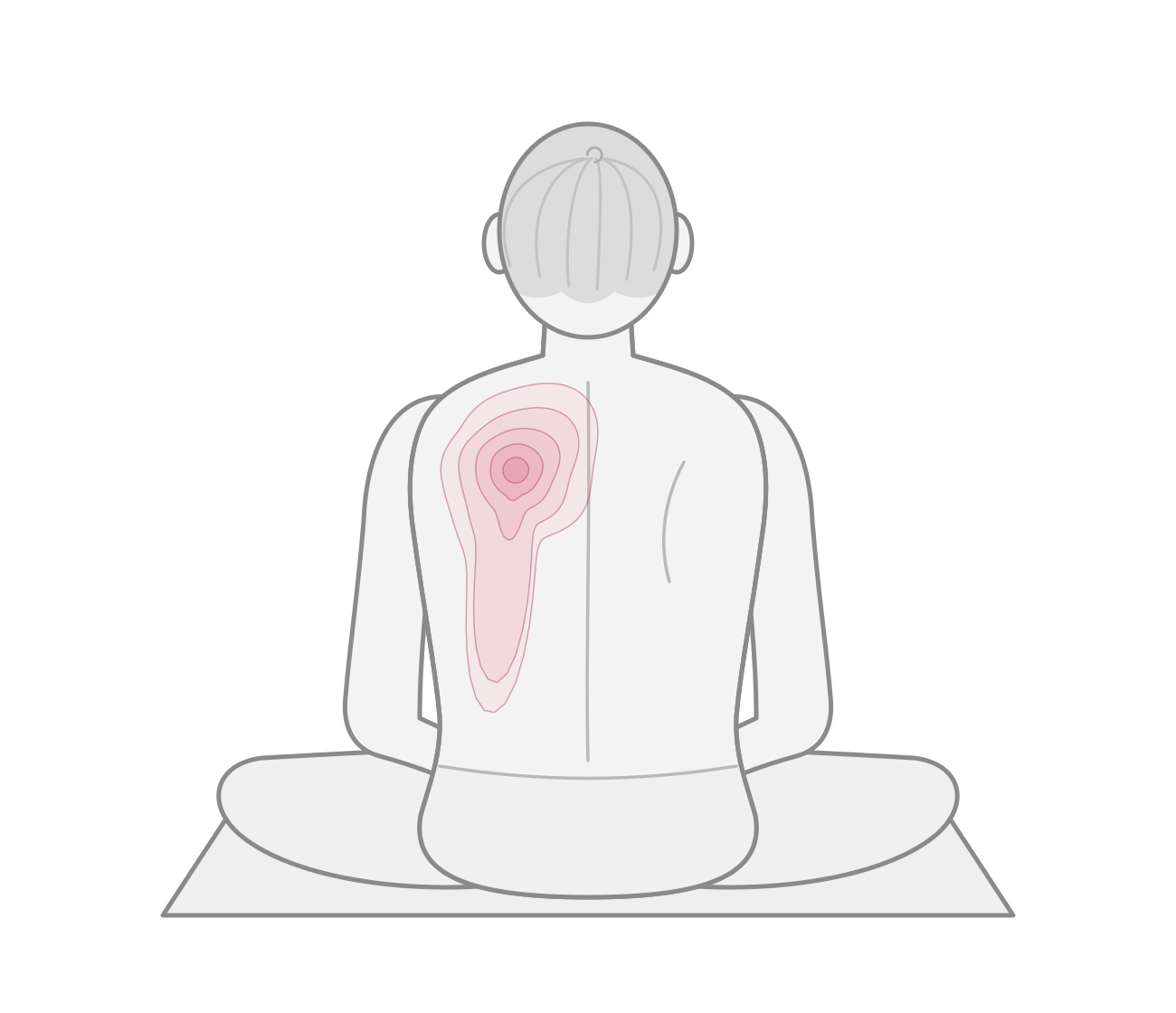
In the days following my talk with the assistant teacher, my newfound equanimity spread beyond the sensations of physical pain. I slowly began to see how all my efforts to balance the right-handedness of my mind were the same underlying pattern behind my childhood habit of stepping over an equal number of sidewalk cracks with each foot. Even though the visualization work helped bring a lot of sensation online, there was an unmistakable obsessive-compulsive quality to it. This realization brought a totally unexpected sense of peace, helping me let go of the craving for symmetry and relax into the reality of being a right-handed being, with a mind that doesn't always do things in a perfectly balanced and harmonious way as I would like it to. There were times during the body scans when, for a single heartbeat, half of the rectangular plane sweeping through my torso would disappear and I would feel nothing on that half of my body, typically the left half, then the full rectangle would reappear for the next heartbeat and I would feel both sides of the body. Sometimes when scanning the body part by part, the circular plane moving over the surface of my body would move to a different location than I intended. I resisted these experiences for the first seven days or so, attempting to correct what went wrong by going back one step during a sweep, or trying to pull the circle into its intended location while scanning part by part. When I stopped resisting, things got weirder. The rectangular plane sweeping through my torso would sometimes drop a frame at a fixed interval of two or three heartbeats, but always only on one side, and again typically the left. There were a lot of dropped frames, since I was only moving the rectangular plane about a centimeter at a time. One time while scanning part by part, I was scanning toe to head, and was up to my upper torso, moving the imaginary circle right to left across my lower chest. About three-quarters of the way across, it stopped moving horizontally, then moved diagonally up and to the left. Rather than try to pull it down into its proper position, I ignored it and imagined a second circle on the correct next spot in my lower left chest, focusing in on the sensations in that area. Meanwhile the old circle continued moving up and to the left diagonally. I continued the body scan with the new circle, now moving left to right across the upper chest. The old circle continued on its way for a few moments till my mind's eye lost sight of it, so to speak, extending at least a few feet past the edge of my body. During the 2:30pm group sit on day ten, while sweeping the body from toe to head, I was approaching my hips, and in my mind's eye, something like a cancerous growth or a wart began to appear on the visualization of my right hip. I just ignored it and scanned right over it, but before it left the periphery of my mind's eye, it was at least the size of a basketball. These experiences gave me the impression that the visualizing part of my mind was glitching. But because I wasn't craving for order and harmony anymore, I had a show-must-go-on attitude, and I never missed a beat with my body scans, though I definitely noticed in the moment how strange they were.
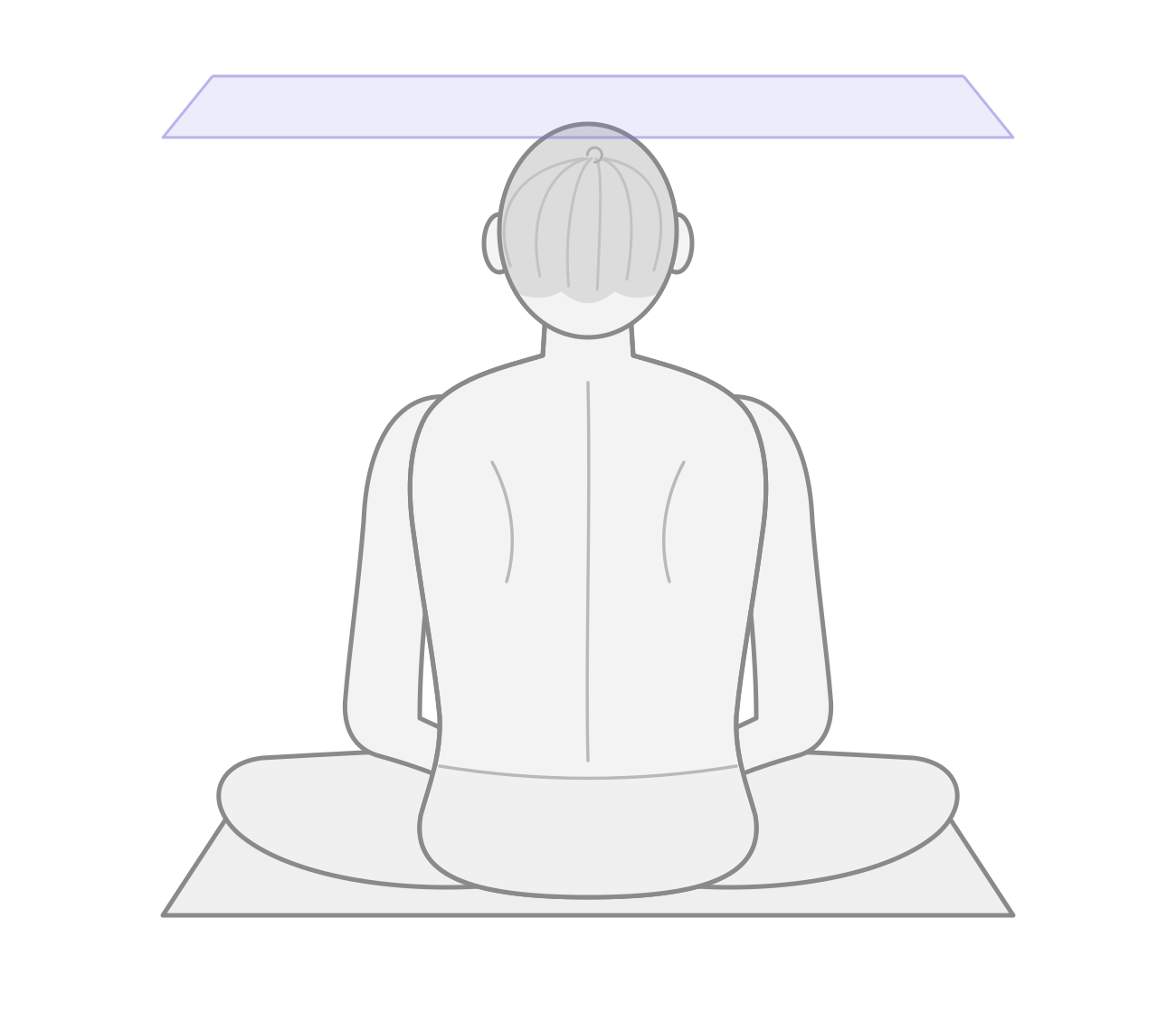
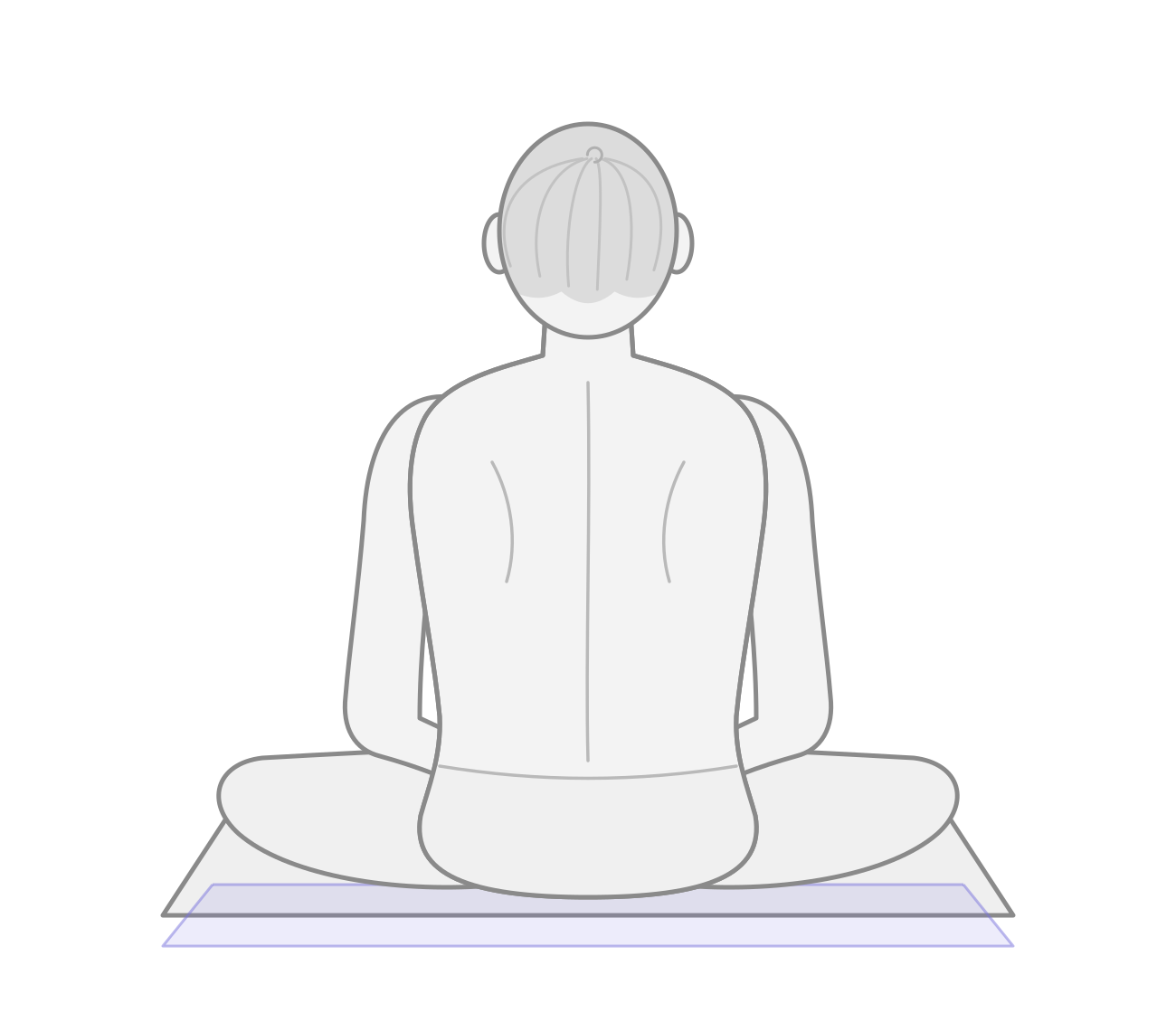
It seems as though many of the sensations I experienced over the course of the retreat were the very beginning of an unclenching process in both my body and mind, like a slow unraveling of a tangled ball of yarn. Just as Goenka taught, the grooves of saṅkhāra naturally begin to rise to the surface and dissolve when one stops generating new ones. Ten days of silent isolation with little to do but eat, sleep, and observe sensations in the body may be the most highly optimized environment to that end[11]. In light of this, there was something eerie about noticing one of the oldest patterns of my mind, obsessive-compulsiveness, emerge during the retreat. Beyond that, as the tension in my right leg continued to release, the tension on my left side, from my hip up to my shoulder, began to increase in both relative and absolute terms. I've held these physical patterns for more than half of my life. The lower right side has always been the louder of the two, and as it relaxed, the left side began to speak up.
Something similar was unfolding in my sleep. About halfway through the retreat, I began to have stressful dreams. The common theme in each was that I spent a great deal of effort in response to some event where I lost my safety, security, or social standing. A couple times, I woke up out of these dreams around 3am and noticed myself a few minutes later still working through whatever issue was at hand in the dream. Granted, I was very drowsy, but not in a state in which one dreams. It was as if my mind was stuck in a pessimistic pattern preparing for the expectation of a scarce future. And what is an expectation if not the mind locked in a pattern of clenching for some future outcome, whether positive or negative? I can't say that there was any resolution to the pattern behind these dreams, but neither was there anything that provoked it. I figure that it too was like an old saṅkhāra rising to the surface.
Days eight and nine were more challenging mentally than physically. On day eight, I slept through the 4am bell and was ten minutes late to the 4:30am meditation. During the 9-11am session, when we were allowed to meditate in our rooms, I left the meditation hall and accidentally fell asleep after about 30 minutes of meditating in my room. This hurt the pride I had built up around staying in the meditation hall more than my peers during the non-group sits. Goenka also began noting that day ten would not be a day of serious meditation, because noble silence would be over, and "chatter and serious meditation don't go together". Learning that we'd be allowed to talk on day ten made the end of the course feel closer. I felt my resolve drop in proportion with the distance to the finish line, and I wished he hadn't told us that was coming. Then, I started doubting the life plans that I had sorted out in the early days of the retreat. I was obviously in a bad mood, and the new challenge for me was to remain equanimous in spite of it, just noticing doubt and sluggishness without wanting them to cease, and without craving for more of the determination and clarity I had experienced on days four through seven.
Despite Goenka's suggestion that day ten would not be a day of serious meditation, the 2:30pm and 6pm group sits on day ten were the most still of the entire retreat for me. Both times I sat so still that almost nothing but my diaphragm moved. I didn't even find myself needing to gradually straighten my neck, something I would do when noticing that my head was drooping forward. Perhaps the happiness and confidence I felt upon reaching the end of an arduous journey strengthened my equanimity.
At the end of each group meditation and the evening discourses, Goenka would chant, "Bhavatu sabba-maṅgalaṃ" three times, meaning may all beings be happy in Pāḷi. This got me thinking about what appears to be a fundamental communication problem in Buddhism. What does it really mean to want other beings to be happy? If craving and aversion are the source of suffering, then how does one want something without craving it? I bet I could come up with an argument supporting the idea of desire without craving, but for such a fundamental teaching of Buddhism, I shouldn't have to. It should be totally unambiguous. So what is right desire? Or how should one ideally feel when they are not stuck in a pattern of craving and aversion? If thriving is the opposite of suffering, then what does thriving look like to a Buddhist? Buddhism, at least in the way it is understood in the West, is great at pointing out what thriving isn't. But it's not so good at pointing out what it is. Maybe there are reasons for this. Perhaps Buddha felt that emphasizing what thriving looks like would become a pitfall, generating a new source of craving for his followers. Or perhaps the Buddhist idea of thriving is just incomprehensible to the layperson.
Buddhism's communication problem makes it liable to attract the type of person with an aversion to experience itself. If one already struggles with the pain of being alive, then the teaching of no self is more likely to sound attractive. Credit here to Goenka for only touching very lightly on this topic. Considering Goenka's earlier remarks that the theory of Buddhism is not useful without the practice, perhaps the Vipassanā tradition feels that the nuances of no self are only well understood by the intermediate or advanced practitioner. But most people meet Buddhism's vocabulary long before they meet its practice. Consider the most well-known term from Buddhism, nirvāṇa, meaning to turn off or extinguish. It's the Sanskrit version of the Pāḷi nibbāna, and it's what we commonly understand to be the final stage of Buddha's path, the result of enlightenment. The word is so well known because of the 1990s grunge band named after it. The singer of this band clearly had an aversion to experience, as he died by his own hand. An individual with this sort of temperament may be more likely to interpret "not wanting positive sensations to continue" as "wanting positive sensations to cease", and "not wanting negative sensations to cease" as "relishing pain and darkness". And when one approaches meditation with this mindset, they may inadvertently turn down the magnitude of experience altogether, the way many people report that antidepressants seem to turn down the volume on life, or turn them into zombies. I doubt this is what Buddha had in mind while teaching his followers meditation as a technique to turn down their reactivity, simultaneously becoming more sensitive to the subtle sensations of the present moment. And this is why I stress the lack of emphasis in Buddhism on the way one ought to feel. For example, what does it feel like to enjoy a positive sensation without also craving it, or wanting it to cease? If it were unambiguous how one ought to feel, and if one consistently felt differently, then this could be a clue that there's an issue with their practice. A couple days after the retreat ended, I read this quote from the meditation teacher Shinzen Young: "dissociation is the evil twin of enlightenment". This is exactly what I'm getting at. A lot of serious meditators seem dissociated. They seem to be just watching life go by rather than living in the moment. I mean no disrespect, but their existence isn't always clearly one with less suffering than the average person, much less an existence that's bringing about the happiness of all beings.
In college, I was pretty involved with a couple of organizations at my university's religious center. There was a lecturer from the psychology department who used to occasionally lead guided meditation groups and informal meditation lessons there. He lived in a Buddhist monastery for years and, as I remember it, came inches away from taking a lifelong vow. He was always courteous, but he had a somber vibe. He had an app on his phone that would send notifications multiple times per day reminding him that he was going to die. I can totally see how this could help someone remember to be present with the finite time they have, but it didn't seem to be doing him any favors. I have no idea what he was like before he started using this app, what season of life he may have been in, what hardships he may have been dealing with at the time, or whether or not he was an extremely joyful person on the inside, so I mean zero disrespect when I say that, as an external observer, this constant reminder of death — and whatever Buddhist ideology likely fueled it — didn't seem to be improving his life or his general aura.
There's a similarity here between the ideologies and historical interpretations of Buddhism and Stoicism. The Stoics of ancient Greece and Rome believed that we should focus on what is within our control, like our character and our actions. What lies outside of our control they considered fundamentally neutral, like reputation, illness, aging, and other people's actions. Though they recognized that external circumstances can provoke sadness, impatience, awe, or pleasure, they believed that these circumstances do not ultimately determine whether we live a good life. They taught that distress is the result of incorrectly judging things outside of our control as good or bad, similar to the Buddhist idea that suffering stems from craving and aversion. Stoicism was meant to help people meet hardship without being consumed by grief or anger and meet fortunate events without becoming arrogant or possessive. It did not mean becoming numb or withdrawing from the world. Many Stoics were deeply involved in public life and believed they had a duty to other people. Yet just as Buddhism today can be mistaken for a way of checking out of life, the very word stoic carries the connotation of emotional suppression, or even dissociation. That is different from the Stoic goal, which was not to feel nothing, but to keep our feelings from ruling us.
There's also an analogy here to Friedrich Nietzsche's criticism of Christianity, that Christianity was an inversion of morality that made virtues out of weakness. He argued that it rebranded cowardice as humility, submission as obedience, and the inability to assert oneself as forgiveness. I don't believe this was Jesus's original intent, but it's true that, for many people, Christianity has become a justification to dissociate from their true desires. In Nietzsche's words, this is hostile to life. I believe that Buddhism is too, to the extent that it becomes a justification for one's continued suffering, rather than a way out of it. But I'm not saying that Buddhism is rotten. It has a communication problem, but there's a pearl at its core. The same goes for Christianity. In fact, as I wondered during the retreat what one might feel in the absence of craving and aversion, Jesus's fruits of the spirit came to mind: love, joy, peace, patience, kindness, goodness, faithfulness, gentleness, and self-control.
Back when I meditated daily, I met a serious meditator whose friend had spent years moving between Buddhist monasteries, meditating diligently. For a long stretch of time, his friend's practice stopped bearing fruit. His breakthrough came when he discovered the teachings of Jesus and realized the practice is not about becoming a progressively more asexual and sensationless recluse, but about becoming more loving, compassionate, and full of goodwill for others. Although at face value it may not seem obvious how the teachings of Jesus and Buddha relate to one another, both are the product of a search for truth in the deep inner realms of consciousness. Buddha, before starting his ministry, spent 49 days fasting and meditating under a tree, and Jesus fasted and prayed in the desert for 40. They likely passed through many of the same states of consciousness and gleaned many of the same insights. But by no means am I suggesting their teachings are the same, only that they can complement one another.
Though Buddhism doesn't seem to emphasize how one ought to feel nearly as much as how one ought not to feel, it doesn't skip the topic entirely. Starting around day seven, Goenka spoke of Buddhism's ten pāramīs, or perfections. The pāramīs include qualities like equanimity and selfless love, but also ones like renunciation and effort, which are more like practices than feelings. On day ten, we learned mettā meditation, a practice to use for a few minutes at the end of our Vipassanā meditation sessions. Goenka, over the speakers, would have us repeat after him in our heads as he would chant in a very slow, sing-songy voice things like "may I be peaceful", "may all beings share my peace", "may I be free from suffering", and "may all beings be free from suffering", alternating his chants between the English and Pāḷi versions of each. Because we only practiced mettā a few times, and because he chanted so slowly and every English line was interspersed with a Pāḷi line, I never caught the full script he recited. The spirit of the practice, however, was clear: to feel goodwill toward others. But Goenka said that we should only practice mettā when we are feeling uniform subtle sensations throughout the body in our Vipassanā meditation. I had blind spots, dull areas, or areas of gross, painful sensations in every single Vipassanā meditation throughout the retreat. I don't think that was a problem, but according to Goenka's own advice I shouldn't have been practicing mettā meditation anyway. Regardless, mettā clearly contains the implication of a way one ought to feel. More broadly, the recorded teachings from the life of Buddha and his disciples, known as the Pāḷi Canon, are well over 2.5 million words in total, and many more when translated to English, enough to fill several feet of bookshelf space. So I'm confident that there are many descriptions of how one ought to feel, and that many flavors of Buddhism throughout the last 2,500 years have emphasized these ideas to a much greater extent than they currently are in the West.
Buddhism in the West doesn't only attract those with an aversion to experience. It also has a very strong appeal, relative to other religious traditions, to the materialist skeptic. By materialist, I mean the view that all there is in the universe is physical stuff — matter, light, etc., or more specifically the particles and fields they're made of — and that everything we experience and observe must ultimately be reducible to this physical stuff. By skeptic, I mean someone inclined to dismiss all observations, divine encounters chief among them, that aren't clearly explained by the emergent properties of matter as we currently understand it (chemistry, biology, etc.), considering them more likely to be errors in human cognition than real phenomena.
Buddhism is the nerdiest religion, perhaps the only one that self-described nerds are more likely to practice than the general population. Whereas a Western Hindu might tell you to avoid eating animal products because of the inherent value of all animal souls, a Western Buddhist is probably more likely to frame it in utilitarian terms, saying something or other about how a vegetarian diet promotes brain health in a way that aids serious meditation. For one, many argue that Buddhism is not a religion in the first place, Buddha himself having prescribed no required form of deity worship. This is particularly agreeable to the atheist. Further, Buddhism's focus on the practice of meditation gives it an empirical flavor. It considers the highest form of wisdom to be the wisdom of direct experience, as if whispering seductively in the skeptic's ear, "Don't trust my results, just run the experiment yourself". Most religious traditions have esoteric traditions focused on internal practices, like the monastic traditions of Christianity, Sufism in Islam, Kabbalah in Judaism, and the variety of yogic traditions in Hinduism. But these practices are all peripheral to the way that the layperson experiences their religion. Granted, even in nominally Buddhist cultures of Asia, the actual practice of meditation is peripheral to rites, rituals, and the worship of a deified form of Buddha. In this regard, Buddhism in the West is probably closer to Buddha's original intent, and its emphasis on practice over ceremony and deities makes it feel way less woo-woo than other religions, like Hinduism, with its pantheon of gods, spirits, and supernatural forces. This makes Buddhism much more palatable to the skeptical mind. The icing on the cake is Buddhism's claim that ignorance is the cause of craving and aversion, and insight the remedy — a tailor-made ideology for the skeptical, nerdy type who has a lot of their self-worth tied up in being less ignorant than other people.
But if Buddhism is taken seriously, in its original form, then it's every bit as woo-woo as any other religion. On days ten and eleven of the retreat, there were some reading materials laid out in the dining hall. Most were books by Goenka, books about his lineage of teachers, or books published by Goenka's research organization, the Vipassanā Research Institute (distinct from the nonprofits that govern the individual Vipassanā centers). During a rest period, I flipped through one of the Institute's pamphlets, A re-appraisal of Patanjali's Yoga-sutras in the light of the Buddha's teaching by S.N. Tandon. As I mentioned earlier, the Yoga Sūtras is the foundational text of the yogic traditions of Hinduism. In its most general form, yoga just means disciplined action, so Buddhist monks can be called yogis, and historically they often have been. But throughout this essay, when I discuss Yoga, I'm referring to the Hindu traditions. In this pamphlet, Tandon points out that Buddha believed in a host of supernatural powers, including telepathy, remote viewing, and the ability to multiply one's body and appear in two or more places at once. Buddha also believed that he routinely used his psychic powers to travel to the brahmalokā, or brahmā realms, inhabited by divine beings who had reincarnated there. Spiritual traditions around the world speak of humans with supernatural powers used for utilitarian ends like winning a battle, healing a sick person, or gaining followers through public displays of their powers. Buddha didn't deny the existence of these powers, but he did discourage indulgence in them, especially as a means of persuasion. He believed they were a distraction, and that for many, the pursuit of their attainment would become another source of craving. And Buddha certainly believed in gods, many of whom could intervene in worldly events. He believed there were six tiers of heavenly gods, and two realms of the highest gods of the brahmalokā. So Buddhism is only less woo-woo than other religions in the sense that the woo is de-emphasized. Yet Buddhism has cultural appeal with the skeptic.
This presents a problem for the skeptic who practices Buddhist meditation. This person may feel that Buddha was wise in discovering and promoting these techniques that have improved the lives of so many people and whose benefits are backed by troves of neuroscience research. But this same person must either be unaware of the supernatural phenomena Buddha himself acknowledged, or else conclude that Buddha was highly delusional. Why would anyone trust the path laid out by someone whose mental faculties they find suspect?
I don't have an answer to that, and anyway, I didn't pick up the pamphlet on the Yoga Sūtras to read about supernatural powers. It caught my eye because I had some foreknowledge of the Yoga Sūtras and its similarities with Buddhism. Both systems come from Northern India, and both are organized into a path of eight parts, starting with morality, continuing with practices of meditation, and culminating in some final ideal state of awareness, insight, or wisdom.

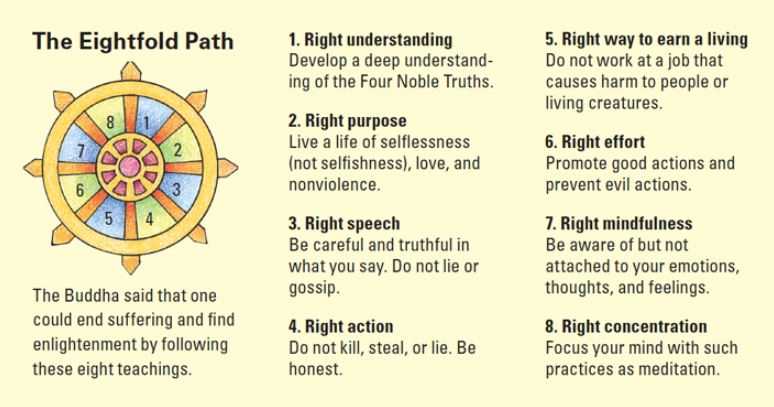
The pamphlet opens on the origins of the Yoga Sūtras, noting that Patañjali lived at least a few centuries after Buddha[12], and that while Buddha's teachings were still highly influential, his original teachings, as recorded in the Pāḷi Canon, had already been lost in India, preserved abroad in Sri Lanka, Burma, Thailand, and Laos. Tandon argues that this is responsible for both the similarities and differences between the two traditions, the biggest difference being their end goal. Patañjali identified it as the cessation of mental fluctuations, and Buddha identified it as the cessation of the mind itself. As far as I can tell, this must be what is meant by nibbāna (nirvāṇa).
Despite how crazy that sounds, I'm open-minded to the possibility that Buddha's final goal was better. That said, as I pondered the difference between the two traditions while the retreat was coming to a close, it occurred to me that in some ways, Patañjali's path, at least as it's commonly taught in the West, is more practical. Consider, for example, the concept of ahiṃsā, the Pāḷi (and Sanskrit) word for non-harm. On paper, it's every bit as important in Buddhism as in Yoga. But the two traditions were carried to the West by very different crowds, each emphasizing what best matched its temperament. If the Western Buddhist is the professorial nerd explaining the default mode network, the Western yogi is the barefoot hippie telling you to honor your body and that we're all drops in the same ocean of love, man. It's the yogi, not the Buddhist, whose vocabulary is saturated with ahiṃsā. Fittingly, the first limb of Yoga is yama, or ethical restraints, and it starts with ahiṃsā. The practice of ahiṃsā applies to all beings, including oneself. Hence my old yoga teacher's constant reminder, "No pain". If you're causing pain for yourself, then you're not practicing ahiṃsā. Practicing ahiṃsā naturally leads to the development of self-compassion, because it implies that one ought to extend the same empathy to oneself as they do to others. Buddha's path, on the other hand, starts with right view or right understanding, which reads more like a statement of faith that "suffering exists, its cause is craving and aversion, these can end, and there is a path to reach that end".
At the retreat, we all observed the five precepts for the duration of our stay:
- No killing
- No stealing
- No sexual activity
- No speaking of lies
- No consumption of intoxicants
I've seen the first precept recast as reverence for life. That makes it feel a lot closer to ahiṃsā. But in any case, there wasn't much said about the precepts or why exactly we observed them. Despite Goenka's repeated suggestion that practice is at least as important as theory, the precepts were not presented as practices in and of themselves, but rather as mere prerequisites to the practice of meditation. No killing, however, naturally became a practice. I noticed myself watching the ground to avoid ant trails, blowing mosquitos away rather than slapping them, and coming to appreciate the massive spider that lives above one of the shared toilets, since I couldn't take matters into my own hands even if I wanted to.
The third limb of Yoga is āsana, or posture. Its original intent was to achieve a steady and comfortable sitting position for long stretches of meditation by relaxing the mind and body. It's also the limb that modern yoga ran with, invoking it as the classical justification for yoga as exercise as we've come to know it. Today, Yoga traditions that place a greater emphasis on the practice of meditation teach āsana as preparation for it, a way to steady the mind and the body and to build the strength and mobility needed to sit comfortably for long stretches, commonly using the types of postures that strengthen the lower back and open the hips. The only Buddhist tradition I know of that, at least in part, emphasizes physical preparation for comfortable seated meditation is the Tibetan practice of trul khor, also called Tibetan yoga, which has historically been a closely guarded secret restricted to initiates.
Perhaps the highly trained, equanimous mind can bear any disturbance without a reaction of craving or aversion, but if physical pain and a lack of self-compassion are major impediments to the development of equanimity in the first place, then practicing ahiṃsā and āsana seem like great starting points for a chair-based society with tight hips and self-esteem issues.
I took this retreat in Bali, and I'm currently staying in the town of Ubud, possibly the global capital of self-compassion and woo-woo spirituality. Although I haven't read or watched Eat, Pray, Love, I believe the final third of the author's journey, on Love, takes place in Bali, and specifically Ubud. I arrived here aware of a common criticism of Ubud. Some people here are the type who, upon feeling love for themselves for the first time or simply realizing that it's okay to be who they are as they are right now, undergo such a strong transformation that they get stuck craving the expansiveness, catharsis, or joy that came with it. This can manifest as a never-ending search for the next healing modality, complete with a set of niche fashions, habits, and vocabulary for people in the know, creating and reinforcing the idea that one is a spiritually elevated being.

Despite the criticisms and my preconceived notions, I think Ubud's great. Sure, sometimes people seem to get stuck in that early transformation and become obsessed with healing, but it doesn't make that initial transformation any less important, powerful, or necessary, especially for those of us raised in a culture steeped in the subliminal messaging of marketing, music, and film that says one ought not to accept oneself and that one ought not to consider oneself worthy of love — at least not yet. Maybe this issue was so foreign in the culture of roughly 500 BC India that Buddha didn't need to emphasize any remedy for it. Indians of 500 BC were also not overstimulated, chairbound people who interacted with a screen and a keyboard for a living, so they probably had a much easier time comfortably sitting cross-legged for an extended period of time. These issues matter today, and as much as one might be inclined to point out the silliness or irrationality of the more outlandish beliefs and practices arising from New Age spirituality or the spiritual-but-not-religious movement, these beliefs and practices are growing faster than any religion because they work for people, in the sense that they provide something missing in their lives. This is like the aphorism "tradition is smarter than you". A belief or tradition may seem totally irrational, but the fact that it has survived decades or centuries of cultural selection suggests it may contain some wisdom or utility that you don't fully understand.
Buddhist meditation moves along a spectrum from gross to subtle, but New Age practices start at a much more gross level: just learning to love yourself, feel compassion, be gentle, take it easy, or go with the flow. Back when I meditated daily, I didn't have much self-compassion. Had I come to this retreat without it, I think it would have been much more difficult. The importance of being able to forgive oneself cannot be overstated with regard to the ability to sit still and continually notice and redirect the wandering mind in one's meditation practice. Here, too, New Age spirituality has an advantage in that it doesn't reject the self. It prefers the language of the higher self. If, however, one is attached to the idea that the self does not exist, the whole idea of forgiving oneself may seem totally illogical. The inability to forgive is perhaps the clearest example of the clenched, suffering mind. As the saying goes, a grudge poisons its holder. It's a fixed state of clenching toward oneself or another, and to truly forgive is to unclench, to relax the mind's aversion to that individual.
Ultimately, I am extremely happy I chose to do this retreat. All of the patterns of physical clenching in my body still exist, but the relief I experienced was well worth ten days of isolation and then some. This retreat gave me a new perspective on the fact that I quit meditating daily six years ago. For a while, I mourned losing the habit, feeling like I ought not to have quit or that my life would be better if I had kept it up. But now I'm glad I quit. I have conviction that I was practicing incorrectly or at least suboptimally. I wasn't experiencing any benefits from it anymore. On day nine, during the evening discourse, Goenka said that equanimity and awareness are like the wings of a bird. They have to be equal in strength for the bird to fly. Upon hearing that, I realized that my old practice had lots of awareness, especially of my flaws, shortcomings, and physical pain, but it had very little equanimity.
I'm also glad I took a course from a lineage of Buddhism straight out of Asia, rather than a sanitized Western retreat stripped of any teachings that don't align with the materialist view of the world, like the concept of reincarnation. Goenka may have tailored his teaching to a certain degree for the Western mind, but I doubt he intentionally censored any of the teachings as he learned them. It was clear by the end of the retreat that the Vipassanā lineage of Burma has incredible pride in the purity of its teachings, and whether justified or not, one gets the sense it may really be Buddhism as Buddha would have taught it. It felt like a mini-immersion in a culture of ancient history.
The teachings of the Vipassanā tradition are super practical in the sense that any teaching that does not produce benefits now is not considered true Dhamma. But at a higher level, Buddhism as it's popularly understood struggles with a fundamental communication flaw and an inability to offer practical advice. If one ought not to crave, then how can one really desire anything, even if just to help others? If one ought not to crave for positive sensations to continue, can one still enjoy them? What does that feel like in the absence of craving? If one ought not to resist negative sensations, or to want them to cease, can one still dislike them? What does that feel like in the absence of aversion? Buddhism should strive to make these ideas totally unambiguous. If the path laid out by Buddha can be misinterpreted as a path to becoming an asexual, sensationless recluse with no sense of self, then it is bound to attract types of people with an aversion to experience itself, or who struggle in general to attain the things they desire, for whom a life of renunciation may not sound so bad, since one need not renounce a life they never had in the first place. Perhaps most importantly, how can a devoted Buddhist monk who glimpses the value of nibbāna — the cessation of the mind itself — feel they can offer practical advice to the rest of us, so deep in the matrix that this sounds like a completely unreasonable aim?
As I ask these questions, it occurs to me that perhaps many of them are only questions because my theory is ahead of my practice. Goenka spoke only lightly on the concept of no self and said nothing of what nibbāna is other than peace. But I have a much greater familiarity with these concepts due to my cultural milieu and my historic interest in religious traditions. Regardless, if theory ought not to outpace practice, the implication is that the novice is liable to misinterpret precious concepts or spread false ideas if they are given a detailed map of their journey on day one. Buddha himself, while meditating for 49 days under a tree, hesitated before starting his ministry. He wondered if it was even possible to teach Dhamma. As the story goes, Buddha made up his mind only after a god from the brahmalokā, sensing Buddha's hesitation, descended to earth and encouraged him to teach. Because the wisdom of Dhamma is hard to convey, it is withheld from the practitioner and revealed piece by piece, each teaching arriving only when they are ready to receive it. This makes Buddhism more like a mystery school than a religion — something like Freemasonry, where practices are kept secret, like trul khor (Tibetan yoga), and truths are revealed in stages, so that no matter one's level of expertise, they don't really know the destination, let alone the next step, of the path they're on until they reach it. This suggests that Buddhism requires as much faith as any other religious tradition. Even the skeptic, disregarding all the supernatural phenomena of Buddhism, must place a great deal of trust in the teachings to believe that Buddhism is the correct path. So the promise of benefits now and in the future may be a functional requirement of true Dhamma rather than an ideological one. Without benefits at every stage, one's doubts may grow too strong to remain on the path.
That said, Goenka's lineage is a departure from the norm of Buddhist history, in which meditation has largely been a monastic affair. His predecessors believed in sharing their practices with laypeople rather than reserving them for monastic initiates. Goenka himself had six children and ran many businesses. His teacher held a number of posts in the government of newly independent Burma. His teacher's teacher was a farmer. The tradition still reveals theory at the pace of practice, but its door is open to anyone, and that openness is a big part of why it has spread around the world. What it does share with a mystery school is its demand for commitment. Goenka insisted that once you find a path that works for you, you should devote yourself to it rather than mixing bits and pieces from various traditions, lest you confuse and disorient yourself. If you can't see the destination, the only way to learn whether a path leads anywhere is to follow it.
Buddha's path is a spartan one, especially so as it's rendered by the Goenka Vipassanā tradition. To the greatest degree possible, it frees us from the need to conceptualize, focusing only on what we can sense here and now. Buddha, in his rejection of mental devices, treated deity worship, appeals to supernatural forces, and the rites and rituals surrounding them as unnecessary. On that point, the skeptic can most certainly agree. As far as I can tell though, Buddha never denied that beauty, harmony, solace, and awe can come with these things. He simply insisted that it doesn't matter. Real or not, your god cannot do the work for you. In his eyes, the urgent work of ending suffering depends on one's own practice, and to that end, all mental devices are baggage, hindering the purification of the mind by generating new forms of craving and aversion.
Yet, at some level, Buddha seemed to acknowledge that it's mental devices all the way down. In a famous parable, he likens Dhamma to a raft used by someone to cross an expanse of water. He asks his followers a leading question: "Upon reaching the other shore, should this person carry the raft around on their head?" No, he explains, they should leave it behind, for the teachings of Dhamma are to be used, not clung to. This seems to be a tacit admission that Dhamma is itself a mental device — a body of named concepts, each with a psychological weight of its own, that one must keep clenching to hold in mind, itself a subtle pattern of craving, or grasping at the teaching. So perhaps Buddha wasn't a puritan about mental devices, so much as a pragmatist. He is said to have discovered Dhamma, but in sharing it he necessarily reduced it to concepts, creating a tool that slows the currents of craving and aversion, possibly all the way to zero. In my reading, Dhamma is the conceptualization of the path, not the thing itself. The path leads to a place where concepts become irrelevant. It's just as Laozi writes in the first line of the Daodejing: "the way that can be spoken is not the enduring way".
But I must admit that this is simply my interpretation. As I mentioned, Buddha's teachings imply that the novice is liable to misinterpret. I sincerely hope that nothing I have said gives a distorted picture of the teachings of the Vipassanā tradition. Whatever I've gotten right or wrong, the most obvious benefit this retreat has given me, so far, is the focus and resolve to churn out this 24,000-word essay, drawing on ideas that have been floating around my head for more than a decade. This essay would fill something like a third of a typical book, not counting the visuals. It's nearly as long as everything else on my site combined, and it's without a doubt the longest thing I have ever written.
If you want to learn meditation, you can read up on various techniques and try a few till you feel like you've found one that works. Or just do a Vipassanā retreat. We meditated for about 100 hours over the course of the retreat, including the evening of day zero and the morning of day eleven. If you meditate daily for 20 minutes every morning, skipping one day per week, you'll be at it for 350 days before you get 100 hours under your belt. And you'll have zero extended sits of one hour or more. What are the chances you patiently stick with any habit for 350 days before evaluating whether or not it has benefited your life? I recommend you don't "do your research". Chances are, there's a Vipassanā center near you. Just do a retreat, and trust the process.
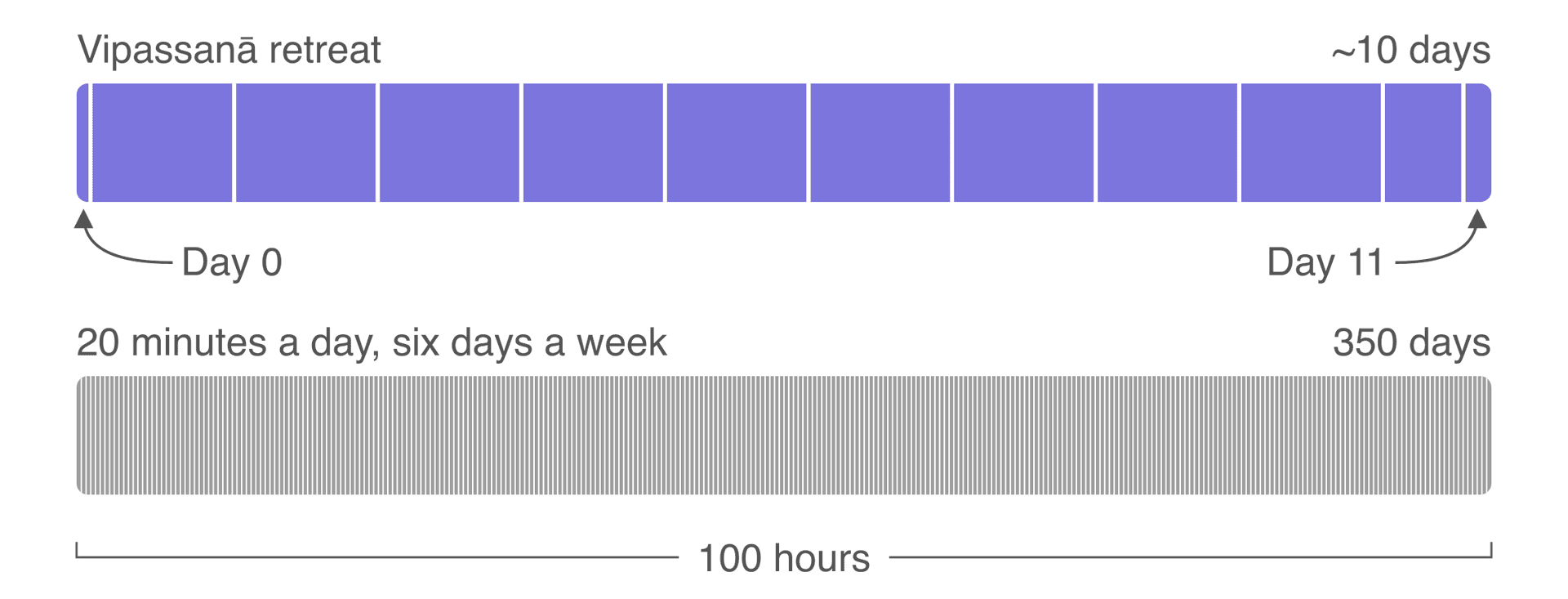
Lastly, a note on the spirit in which these courses are run. They are 100% donation-based, run on the Pāḷi concept of dāna, the spirit of generosity. Toward the end of the retreat, during the evening discourses, Goenka made it clear that one should only give if they feel like helping others, and that one's spot in a Vipassanā course is not secured by a donation they are expected to give at the end of the course. Rather, their spot is secured by someone else who has previously donated. Never was there any indication that one is obliged to give at all or that financial service is the only way to give. I have immense respect for the spirit in which these courses are run, and in light of it, the global scale of the Goenka Vipassanā ecosystem is a strong testament to the efficacy of the techniques Goenka teaches. This was one of the most challenging things I've ever done, yet I can wholeheartedly recommend a ten-day Vipassanā retreat, and Dhamma Geha in particular, to anyone who feels they may benefit from it. Someone has already paid for your spot.
Notes:
-
For a concise explanation of vasocomputation, see Johnson's description from 06:50-18:35 in this video. ↩
-
This is known as the latch-bridge mechanism. ↩
-
Johnson suggests the smooth muscle contracts reflexively where nearby electrical activity is unsettled, and that the contraction itself reduces it to a settled state, shaping the electrical activity in the brain and body that gives rise to our thoughts, emotions, and actions. ↩
-
There was a full dinner on day ten. ↩
-
Turns out it was actually a Tokay gecko. Listen here. Given the proclivity of geckos to climb on any surface they want, I wouldn't doubt this particular gecko was actually on the ceiling of the meditation hall, not the roof. It was very loud. ↩
-
The smell of the pigs was nothing compared to Iowa, where I grew up. A pig farm there typically has thousands of pigs, and you can smell it miles down a country road if the wind is blowing in the right direction. ↩
-
Case in point: Claude made nearly all of the visuals and animations in this essay in a single evening after I finished writing. The essay was a very detailed prompt, granted, but a model that can sketch this well might soon begin to bridge the divide between the digital and physical worlds, drafting highly detailed blueprints for new forms of machinery and robotics. ↩
-
Our muscles may actually be bound together by the fascia into myofascial chains, or trains, that stabilize the body and cause physical discomfort when disrupted. Some of these proposed myofascial chains correlate with acupuncture meridians, and it's possible that acupuncture may unknowingly work in part at the level of these myofascial chains, accounting for at least some of its observed efficacy in treating physical ailments. See Anatomy Trains by Thomas W. Myers. ↩
-
The best massage therapists, then, are probably those who can work just below one's threshold of reactivity, which likely varies not only from person to person, but from muscle to muscle and day to day. ↩
-
In other words, Buddha's purification of the mind is a multistep exergonic reaction. ↩
-
Of course, this only applies to those who freely choose it. Imposed isolation would generate tremendous levels of aversion for most of us. ↩
-
Some scholars argue the true author of the Yoga Sūtras lived as much as 900 years after Buddha. Much less is known about his life than that of Buddha. ↩